
Last updated November 25, 2026
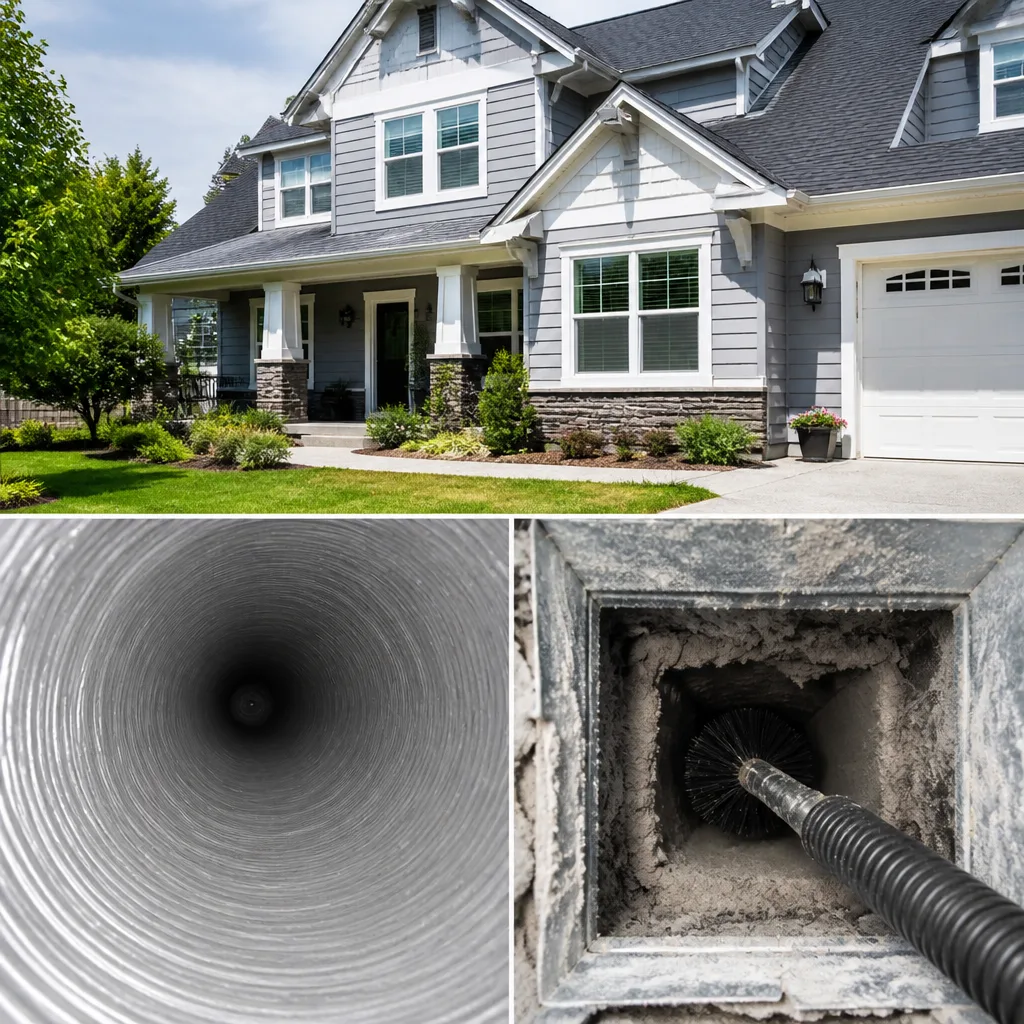 Whole-home duct cleaning
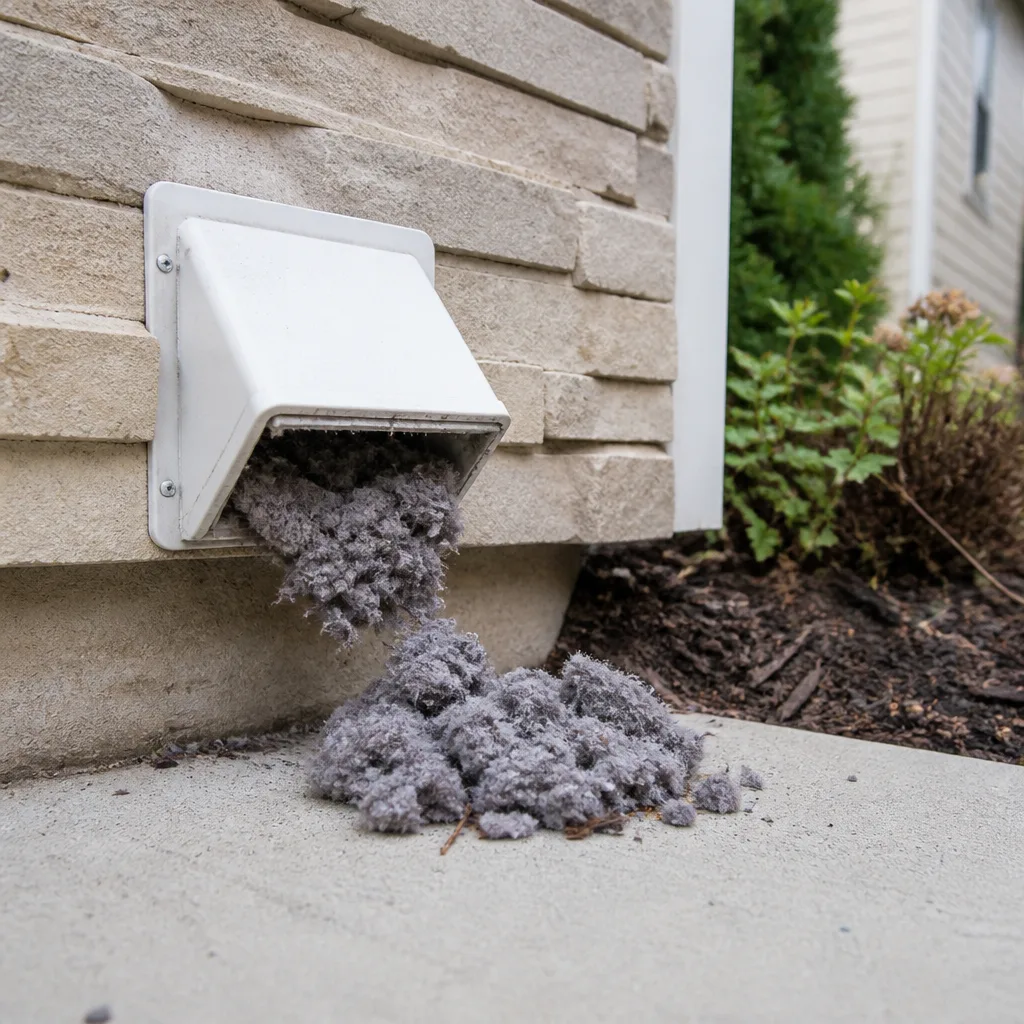 Dryer vent cleaning
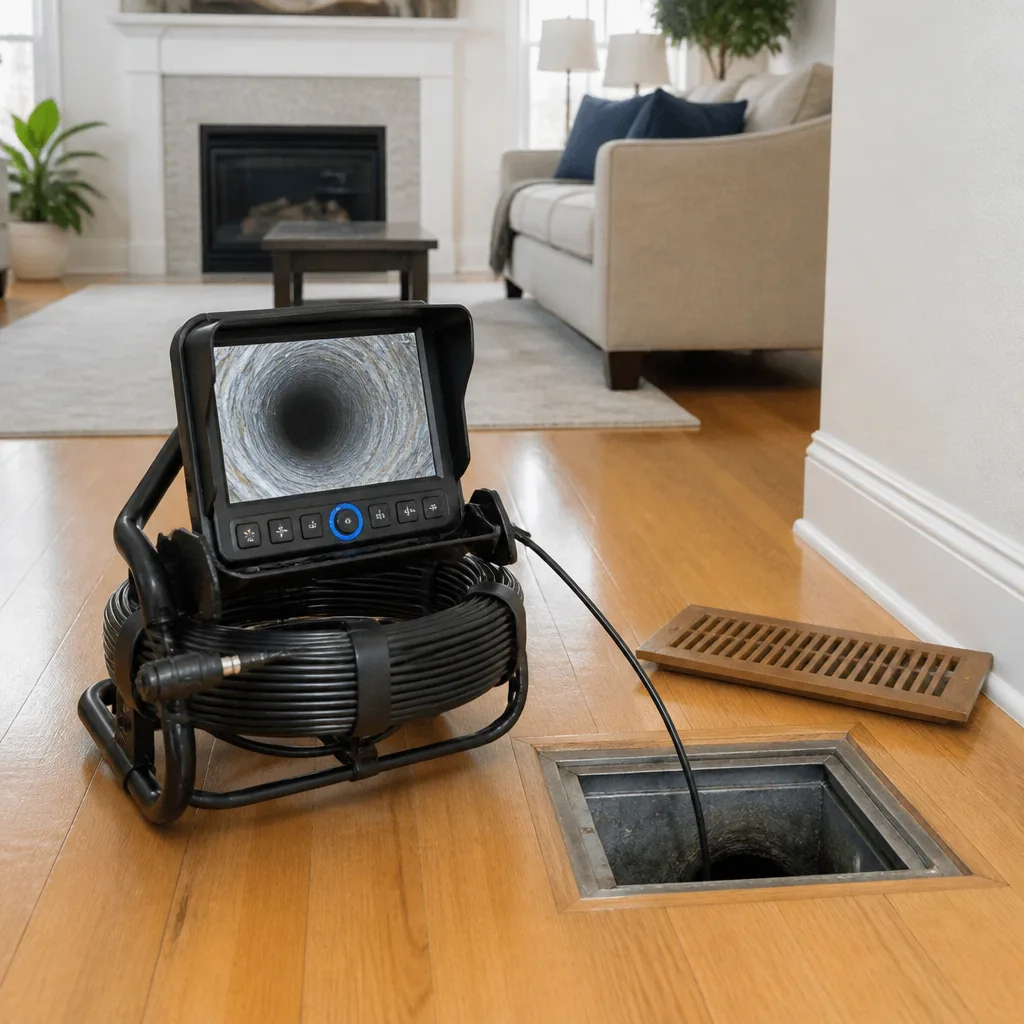 Camera inspection
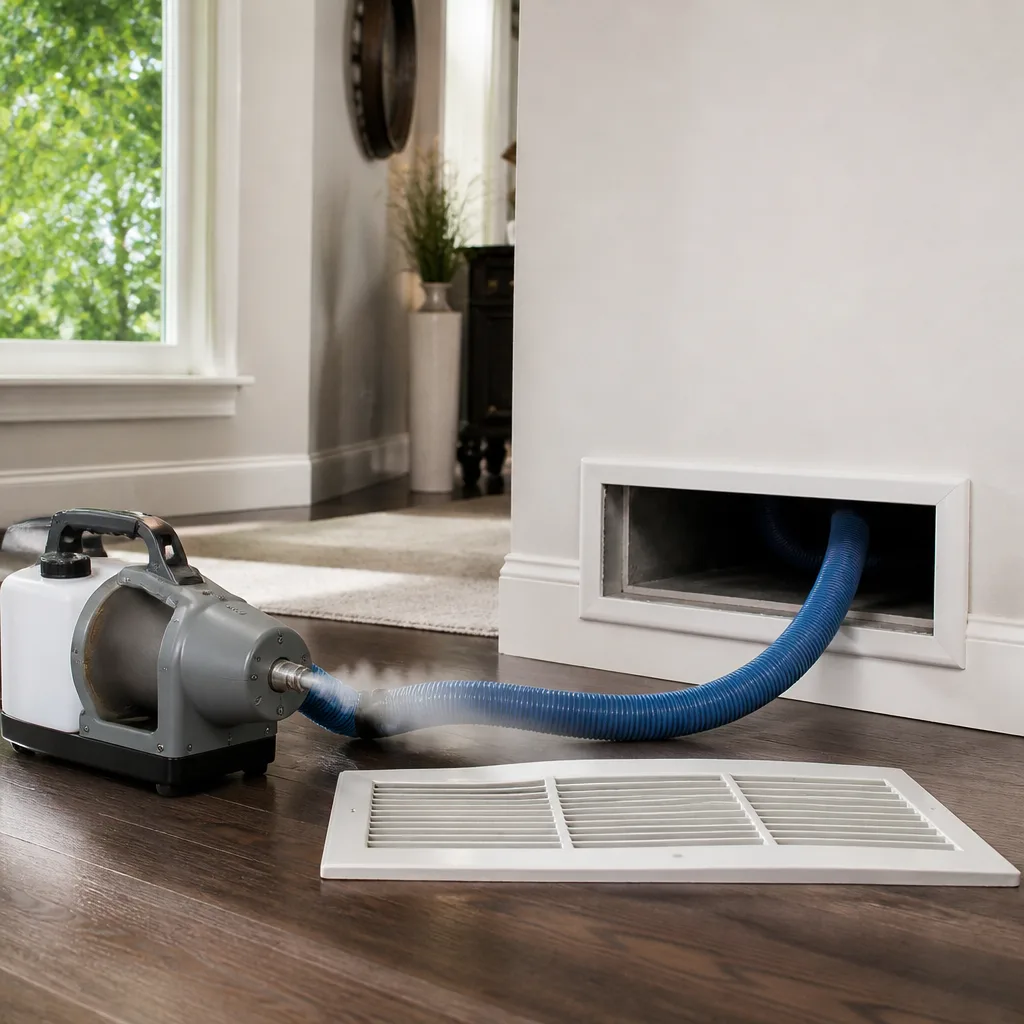 Sanitizing & deodorizing
Whole-system duct and dryer vent check with before-and-after photos - you see exactly what came out of your vents
That "$99 whole-house special" is a bait ad - the real number appears once they are in your hallway, or the "clean" is a shop-vac at the register. We photograph the inside of your ducts before and after instead.
DIY vs Professional Air Duct Cleaning: The Park Santiago Homeowner’s Decision Guide
A homeowner with a shop vac and a dryer vent brush can clean the first 12 to 18 inches of a supply boot effectively. That’s the honest boundary. Push past it and the same tools start working against you: loosening dust that the vacuum can’t capture, then pushing it deeper into the trunk line where it settles in places no homeowner can reach. This guide maps the tasks you can legitimately handle in Park Santiago from the ones that need equipment, access, and containment you simply cannot replicate at home. We’ll cover the specific equipment threshold that separates DIY from professional work, the scenarios where doing it yourself is genuinely the right answer, and how to decide based on what your system actually needs.
Quick Answer
DIY air duct cleaning is a reasonable choice for surface-level tasks: cleaning registers and grilles, inspecting the filter seat, and vacuuming the first 12 to 18 inches of accessible supply boots. Professional cleaning is required for the trunk lines, plenum, and branch runs where debris accumulates out of reach, and where negative-pressure HEPA extraction is the only way to capture what gets dislodged. In Park Santiago’s forced-air homes, the decision comes down to what’s actually dirty – not to how comfortable you are with a vacuum.
Styles & brands we work with
- Whole-home duct cleaning
- Dryer vent cleaning
- Camera inspection
- Sanitizing & deodorizing
Table of Contents
- Where DIY stops being useful
- What you can actually do yourself
- The consumer rotary brush problem
- The equipment threshold that defines professional work
- Scenarios where DIY is the right answer
- Scenarios where professional service is the right answer
- How to decide based on your system
- Common mistakes to avoid
- When to call a professional
Where DIY Stops Being Useful
The first foot of ductwork behind a supply register is the only part of a forced-air system a homeowner can reach, see, and actually clean without specialized equipment. That’s a real fact about residential duct geometry, not a marketing line. Every bit of ductwork past that first boot – the branch runs, the trunk line, the supply plenum where the air handler connects – is either behind drywall, above a drop ceiling, in an attic crawlspace, or sealed inside a hard-duct run with no accessible panel. The vacuum you own can reach it only if the debris can travel to you. It can’t.
What makes this boundary consequential is what happens when you try to work past it. Consumer-grade brushes and blowers dislodge debris without capturing it. Debris that leaves the walls of a duct but stays inside the system doesn’t disappear – it redistributes. Some of it exits through the nearest register as visible dust. Most of it settles in the trunk line, the plenum, or a branch run you can’t see, and every system cycle afterward lifts a little of it back into the airstream. We’ve opened up systems in Park Santiago homes where a homeowner’s weekend cleaning attempt concentrated a light dust issue into a heavy trunk-line problem. That’s the real cost of DIY past the boundary: not the money saved, but the problem made worse.
The honest cutoff is physical, not skill-based. A contractor can be no more skilled than you and still do work you can’t do, because the equipment does the work. When you hear “this is a job for a pro,” the correct response is to ask why – and the why is almost always about access and extraction, not about whether the person holding the tool has a license.
What You Can Actually Do Yourself
There’s a real list of tasks a Park Santiago homeowner can do safely and effectively with basic tools. These fit into a maintenance routine and don’t risk making the system dirtier.
- Clean the supply and return registers. Pop the grille off, wash it in a utility sink or outdoors with mild soapy water, dry it fully, and reinstall. Registers collect dust from room air as much as from the duct, so they’re always worth cleaning – and they’re the single highest-visibility maintenance task in any duct system.
- Vacuum the first 12 to 18 inches of accessible supply boots. Use a shop vac with a brush attachment. Reach in as far as the boot goes before the duct turns or narrows. This is genuinely useful and doesn’t disturb the deeper system.
- Inspect the filter seat. Pull the filter, look at how it sits in the housing. Gaps around the edges let unfiltered air bypass the filter entirely, which is one of the most common and most overlooked air quality issues in Park Santiago homes. A properly seated filter is the highest-leverage DIY task you have.
- Replace or clean the filter on schedule. Basic, but genuinely impactful. A clogged filter reduces airflow, strains the blower, and lets the system run longer and hotter than it should.
- Wipe down accessible return air pathways. Open the return grille and wipe the visible interior surface of the return chase with a damp cloth. Light surface dust, nothing more.
That’s the list. It’s short, and it’s honest. Every task above is maintenance, not cleaning – and maintenance done consistently does extend the interval between professional cleanings. It does not replace them.
The Consumer Rotary Brush Problem
Search “duct cleaning brush” and you’ll find dozens of consumer rotary brushes sold at hardware stores and online for under $50. They fit a drill or a shop vac and they look like professional equipment. Here’s the problem: they agitate without extracting, and in a forced-air system, agitation is only half the job.
The agitate-then-extract sequence is what actually removes debris. Professional rotary systems like Rotobrush agitate the duct walls to break debris loose, but they run in tandem with a negative-pressure vacuum that captures the debris at the moment it’s dislodged. The brush and the vacuum are one coordinated system. A consumer rotary brush is just a brush. It works. But whatever it loosens has nowhere to go except into the airstream.
In Park Santiago homes with central forced-air systems, the trunk line is often the longest continuous run in the network – twenty feet or more of hard duct feeding six to twelve branch takeoffs. Agitated debris from one branch settles throughout that trunk. The next time the system runs, it lifts. A few weeks later you’re seeing dust on the same registers you just cleaned, and the system is dirtier than before.
If you’ve already tried a consumer brush and the registers are dustier faster than before, the right next step is professional extraction – not another pass with the brush. Negative-pressure capture is what’s missing, and no consumer tool provides it.
The Equipment Threshold That Defines Professional Work
The dividing line between DIY and professional duct cleaning is negative-pressure HEPA extraction. If you understand what that requires, you understand why the line is where it is.
Negative-pressure extraction means the cleaning equipment holds the duct system under vacuum while debris is being dislodged. Everything loose gets pulled toward the machine and into a HEPA-filtered containment chamber. Nothing escapes into the living space. That process requires three things a homeowner cannot approximate at a hardware store:
- A machine that can hold an entire system under negative pressure. Consumer shop vacs move a few hundred cubic feet per minute through a short hose. Professional extraction equipment moves enough air to hold an entire trunk-and-branch network under sustained negative pressure while the technician works at the far end.
- HEPA filtration rated for fine particulate. The dust lifted from a duct wall isn’t just visible lint – it’s fine particulate that a standard shop vac filter pushes straight back into the room. HEPA containment is what keeps the cleaning from becoming a contamination event.
- Containment of the living space. Abatement Technologies negative-air equipment does the job of protecting the home during the cleaning itself, not just the ducts. The same negative-air containment used in commercial remediation work runs on every job we do, because the point of cleaning a duct system is to remove debris, not to relocate it into the living room.
There’s a fourth piece most homeowners don’t think about: duct sealing. Cleaning a leaky duct system means cleaning something that will re-leak within weeks. Duct Repair & Sealing closes gaps, gaps at joints, and disconnected runs so the cleaned system stays clean. A customer who only cleans and doesn’t seal has paid for a job with a short half-life. That’s why we treat cleaning and sealing as one system rather than two separate services.
Scenarios Where DIY Is the Right Answer
DIY is not the wrong choice in every situation. There are real scenarios in Park Santiago where homeowners should handle it themselves and save the money.
- New construction dust. A home built or renovated within the past year has drywall dust throughout the system that’s mostly sitting loose in the first few feet of every boot. Register cleaning and boot vacuuming handle most of it. The exception is if you’re seeing dust on registers within days of cleaning – that’s a sign the trunk is loaded and needs extraction.
- Light maintenance between professional visits. If your ducts were professionally cleaned and sealed within the past two years, register cleaning, boot vacuuming, and filter discipline are exactly the right tasks to keep them that way.
- Single-room renovation cleanup. One room’s drywall work, one room’s register. Close the room off, run the HVAC off, clean the register and boot in that room. The rest of the system isn’t affected if the room was contained during the renovation.
- Tenant turnover in a rental unit. A property manager changing tenants in a Park Santiago rental needs to confirm the system is presentable. Register cleaning and a filter change are the right scope. Deep cleaning is a decision for the owner, not the turnover.
- Recent professional cleaning, no symptoms. If you don’t have allergy symptoms, musty odors, or dust issues, and the ducts were cleaned recently, there’s nothing urgent to do. Wait, and maintain.
Notice what all of these have in common: the contamination is fresh, contained, or already handled. DIY works when the problem is surface-level and the system is otherwise in good shape.
Scenarios Where Professional Service Is the Right Answer
Professional service is the right call when the contamination has moved beyond the surface, or when there’s an integrity problem in the system itself. The triggers are usually specific:
- Persistent musty or stale odor when the system runs. Odor is a sign of biological growth somewhere in the system, and growth requires moisture. You’re not going to find that growth from a register. It’s often in the evaporator coil, the plenum, or a branch line near a bathroom exhaust. Professional HVAC cleaning and sanitizing address it in one pass.
- Visible dust on registers within days of cleaning. That’s the trunk-line signal. A system pushing dust back out to registers fast is a system with heavy loading behind the walls.
- Allergy or asthma symptoms that flare inside the home and improve outside. The relationship between airborne debris and symptoms is real. If you’ve ruled out other causes and symptoms track the HVAC schedule, the system is worth investigating.
- Pest evidence in the ducts. Rodent droppings, nesting material, or carcasses require professional containment – not just cleaning but sanitizing afterward. Not a DIY job.
- Energy bills rising without explanation. Leaky ducts pull conditioned air out of the living space. Sealing matters as much as cleaning.
- Dryer running hot or taking longer than it used to. That’s a dryer vent issue – elevated lint buildup is a leading cause of residential fires, and it’s a safety service, not a maintenance service. Professional dryer vent cleaning is the standard response here.
- System is more than 10 years old and has never been cleaned. The physical volume of accumulated debris in a decade-old system is not something a shop vac reaches.
None of these are “you should have called us sooner” scenarios. They’re “this is the point where the DIY boundary is crossed” scenarios. And in each one, the right scope is more than a vacuuming pass: it’s cleaning, and often sealing and sanitizing, so the system is left closed and functioning rather than just less dirty.
How to Decide Based on Your System
Budget matters, but it shouldn’t be the deciding factor. The three inputs that actually determine the right choice are system age, contamination type, and target symptoms. Run through the questions below in order. Roughly ten minutes of assessment gets you to a defensible answer.
- How old is the system, and when was it last cleaned? Never cleaned and over 10 years old: professional service. Cleaned in the past 2 years and no symptoms: maintenance, DIY is fine. In between: keep reading.
- What’s the contamination type? Fresh construction dust: DIY scope. Musty odor, mold smell, pest evidence: professional service. General household dust: depends on the symptom.
- What are you trying to resolve? Aesthetic dust on registers: DIY. Allergy or asthma symptoms indoors: professional service to at least rule the system in or out. Rising energy bills: professional inspection of duct sealing, not just cleaning.
- Do you see visible dust plumes at any register when the system starts? That’s the strongest single DIY-vs-pro signal. Plume means debris in the airstream, which means trunk-level loading. Professional extraction.
- Is there any duct damage visible – disconnected runs, taped joints, sagging flex duct? That’s a sealing problem, and cleaning around it accomplishes little. Professional air duct cleaning plus repair and sealing is the right combined scope.
If you want to do this in tandem with professional maintenance, a reasonable pattern in Park Santiago is professional cleaning every few years, with DIY register cleaning and filter discipline between visits. That keeps the system in shape without spending on redundant service.
| Decision factor | Leans DIY | Leans professional |
|---|---|---|
| System age / last cleaning | Cleaned within 2 years | Never cleaned, 10+ years old |
| Contamination type | Fresh construction dust | Musty odor, pest evidence, mold smell |
| Goal | Register appearance, filter maintenance | Symptom resolution, energy efficiency |
| Visible plumes at system start | No | Yes |
| Visible duct damage | No | Yes – needs sealing, not just cleaning |
How Much Does Professional Air Duct Cleaning Cost in Park Santiago?
Professional air duct cleaning in Park Santiago is priced per system by a written estimate, not per vent or by a teaser coupon figure. Whole-system pricing reflects the size of the system, the amount of ductwork, whether sealing or sanitizing is included, and the accessibility of each run. A homeowner can request a free estimate and get a written number up front – that’s the standard we hold ourselves to and the standard any honest provider should meet.
The industry’s bait-and-switch reputation comes from the opposite model: a low advertised coupon that becomes a dramatically larger invoice once the technician is on site. Per-vent pricing is where that model lives. Our answer is one flat price per system agreed before any work starts, with before-and-after photos of the homeowner’s own ducts so they can see what changed. No coupon math, no surprise add-ons. If a quote sounds dramatically cheaper than the others, it usually reflects a scope that hasn’t been disclosed – often no sealing, no negative-pressure extraction, or per-vent pricing that scales up substantially on a mid-size Park Santiago home.
The estimate is free, and the written estimate sets the final price. Call (844) 625-7040 for a quote – we answer 24/7 and dispatch from 7am to 7pm, Sunday through Friday.
See the difference
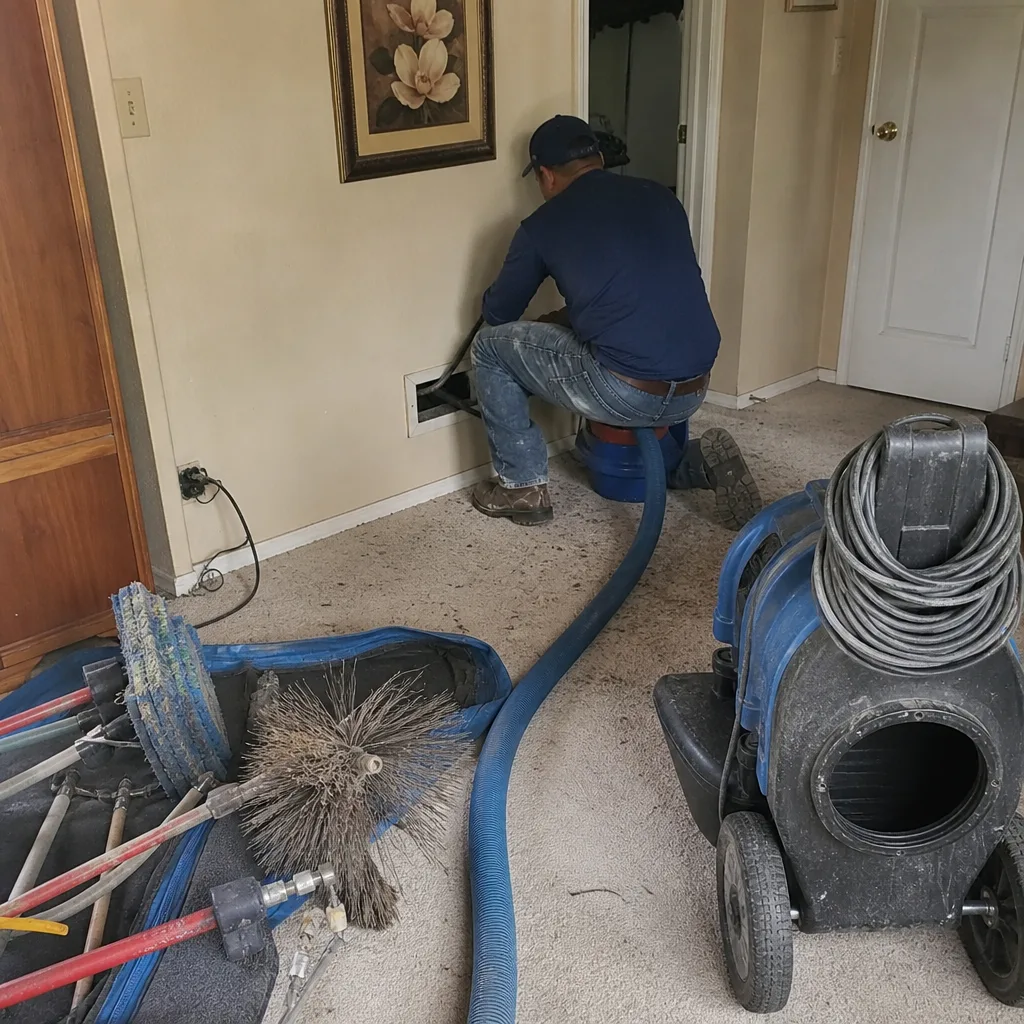 Before
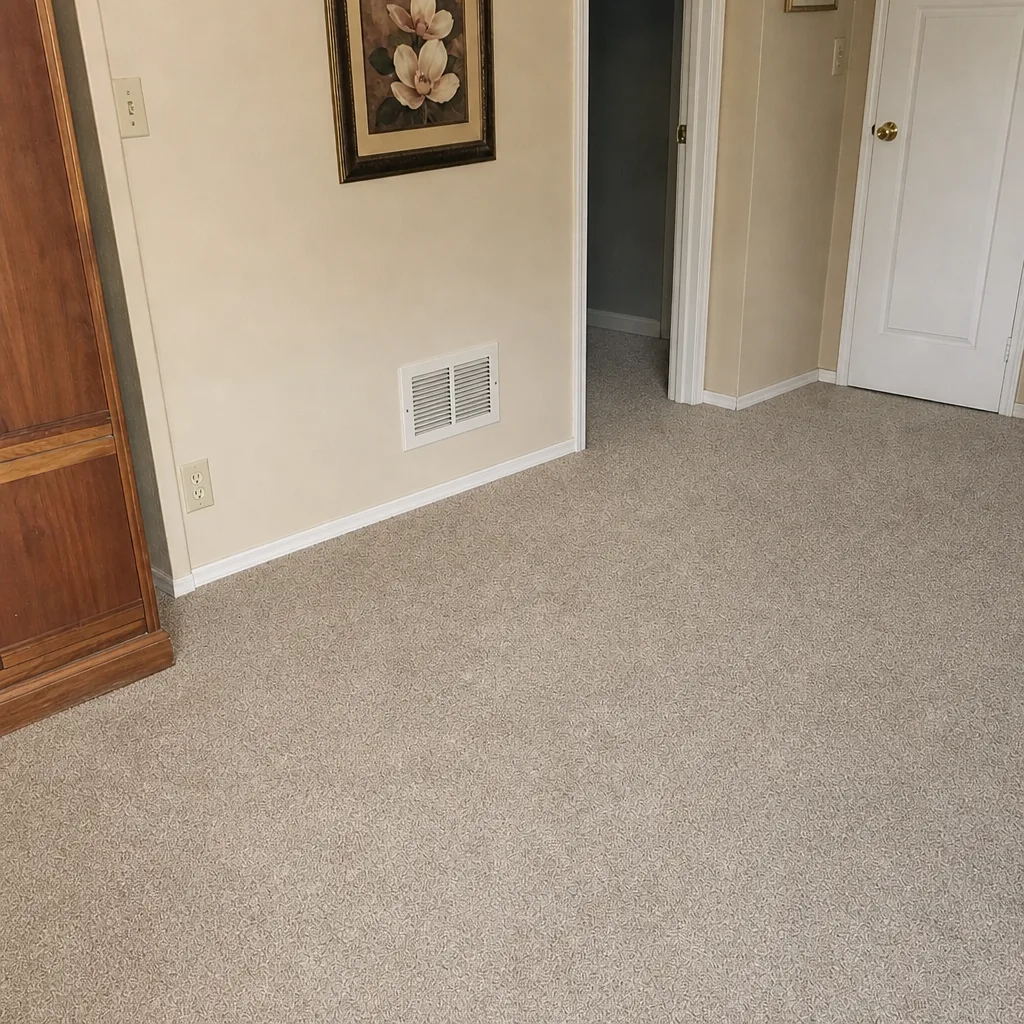 After
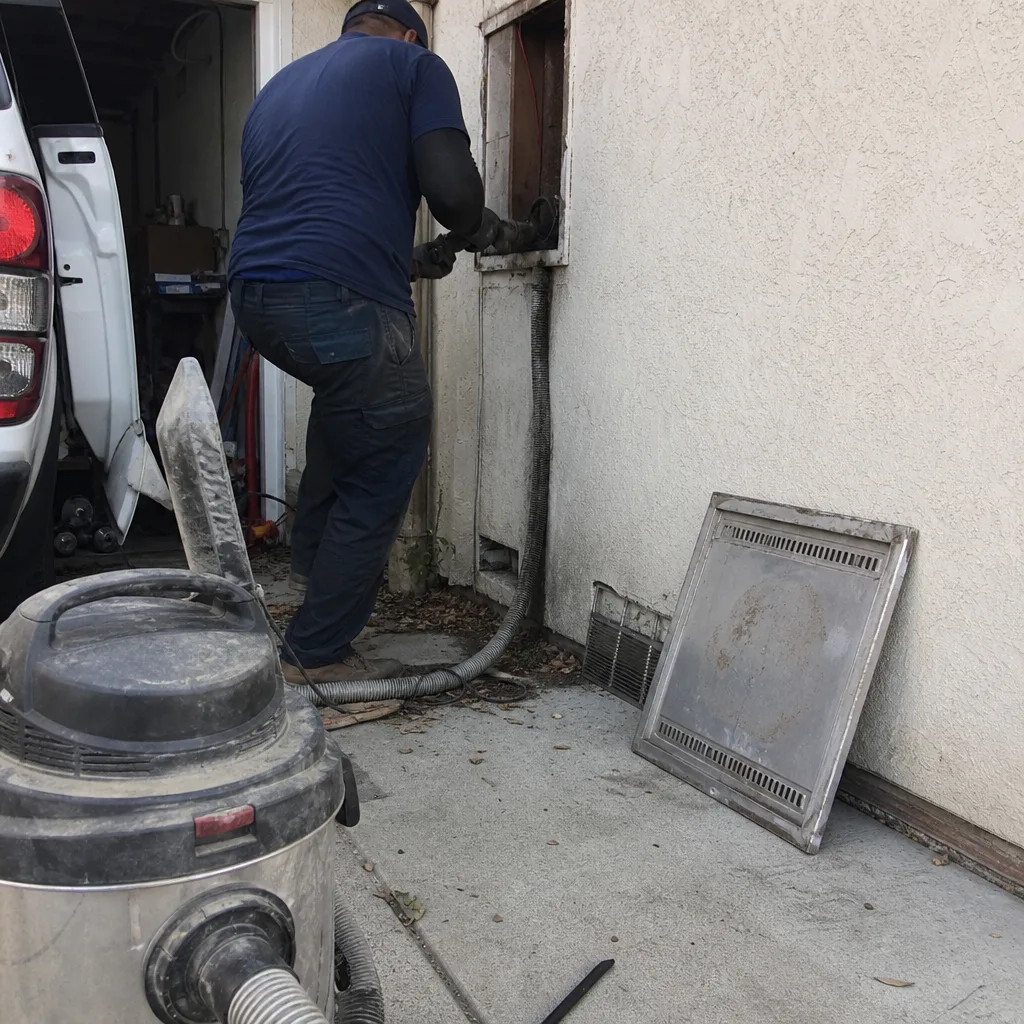 Before
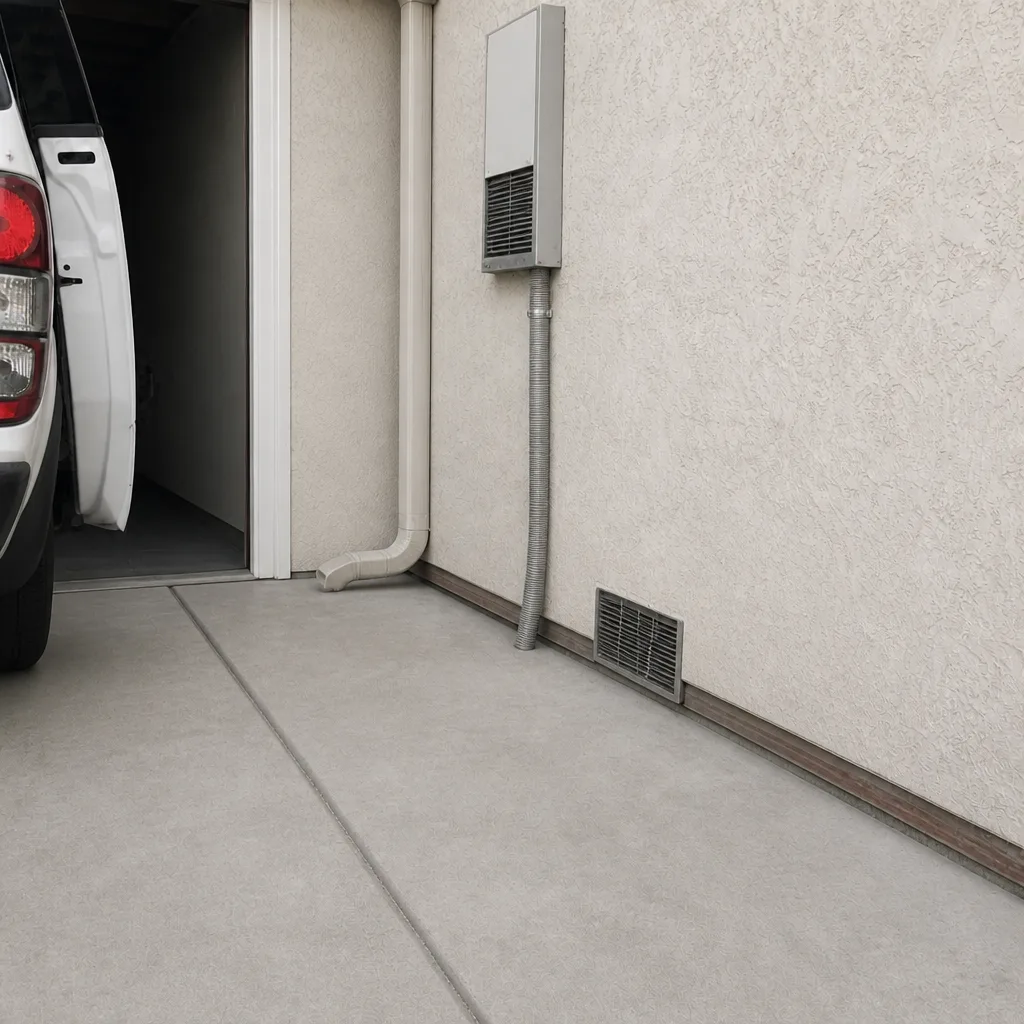 After
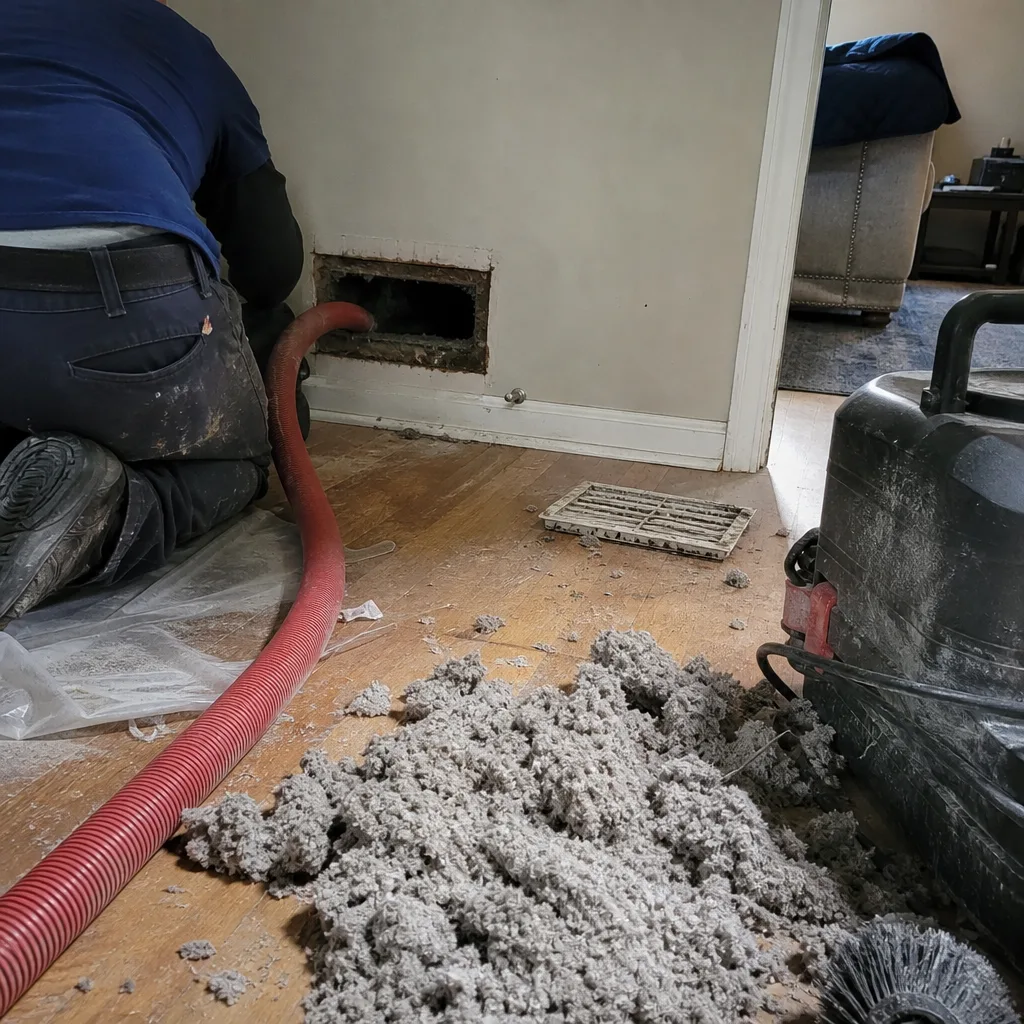 Before
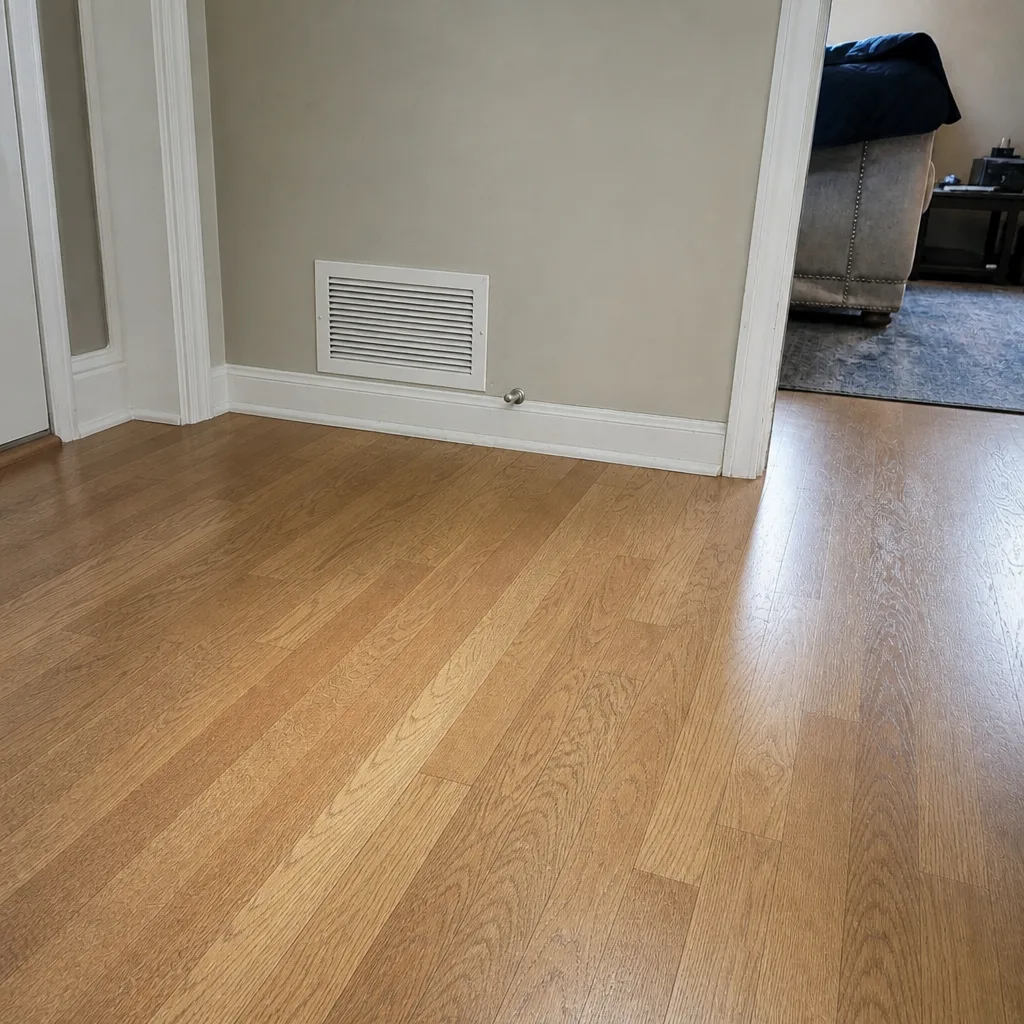 After
Do Air Ducts Really Need Cleaning Every Year?
No. For most Park Santiago homes, professional air duct cleaning every two to four years is enough, depending on household factors. The annual-cleaning pitch is a sales rhythm, not a maintenance standard. Systems with pets, recent renovation, high occupancy, or allergy-sensitive occupants benefit from more frequent cleaning, but “every year no matter what” isn’t the right frame.
The right frame is symptom- and age-based. If the system was cleaned and sealed recently, the registers stay clean, and no one in the home has symptoms that track the HVAC schedule, there’s nothing to fix. DIY maintenance extends the interval. When something changes – new odor, new dust plume, new allergy pattern – that’s when to call, not before. Anyone insisting on annual cleaning regardless of what the system is doing is selling a subscription, not a service.
Common Mistakes to Avoid
- Buying a consumer rotary brush online and running it through every register. It agitates without extraction, which concentrates debris in the trunk line. If you haven’t bought it yet, don’t.
- Running the HVAC during a DIY cleaning. Running the system while you’re working spreads dislodged dust through the entire house. Turn the system off first, work, then let it run only after the cleaning is done.
- Cleaning registers without cleaning the boot behind them. The register is a grille. The boot behind it is where the dust actually sits. Both get cleaned or neither really was.
- Ignoring filter seat gaps around the filter frame. A good filter with a poorly seated frame is a filter bypass problem. Check the seat when you change the filter.
- Cleaning the ducts without checking for leaks and disconnected runs. Cleaned leaks re-dirty fast. If you’re paying for cleaning, pay for sealing in the same visit or you’re wasting the money.
- Skipping dryer vent cleaning because it doesn’t seem urgent. Elevated lint buildup is a leading cause of residential fires. If the dryer is running hot or taking longer, that’s a safety call, not a comfort call. Professional dryer vent cleaning is the right response.
- Believing the lowest quote is the cheapest outcome. A low quote that becomes a large invoice on-site, or that skips sealing and negative-pressure extraction, costs more in the long run. One flat price per system in writing is the standard.
- Assuming all duct cleaning is equal. A shop-vac pass at each register is not the same job as dual-method cleaning with Rotobrush agitation and Nikro extraction, followed by sealing. Ask what’s actually in the scope.
When to Call a Professional
Call a professional when the symptoms point past the first 12 to 18 inches of ductwork. That means musty or stale odor when the system runs, dust returning to registers within days of cleaning, allergy symptoms that flare inside and improve outside, visible plumes at register starts, pest evidence, an uncleaned 10-plus-year-old system, or a dryer running hot. Those scenarios need equipment a homeowner can’t replicate: negative-pressure HEPA extraction and containment of the living space during the work. The local pro is licensed and insured as their state requires, and the estimate is free with the final price set in writing before work starts.
For HVAC cleaning alongside duct cleaning, or for a Park Santiago property with multiple systems, a combined scope usually makes more sense than two separate visits. Air Duct Cleaning Park Santiago offers free estimates in Park Santiago. Call (844) 625-7040 – we answer 24/7, with fast dispatch from 7am to 7pm, Sunday through Friday.
Frequently Asked Questions
Professional air duct cleaning in Park Santiago is priced per system by a written estimate, not per vent. The estimate is free, the flat price per system is agreed before work starts, and the written estimate sets the final price. Call (844) 625-7040 for an exact quote.
You can effectively clean registers, filters, and the first 12 to 18 inches of accessible supply boots with a shop vac. You cannot reach the trunk line, plenum, or branch runs, and those are where most debris accumulates. Shop-vac cleaning past the first boot agitates debris without capturing it.
Cheap quotes usually reflect undisclosed scope differences: no negative-pressure extraction, no sealing, or per-vent pricing that scales up substantially on a mid-size home. One flat price per system in writing, with before-and-after photos, is the sign of an honest quote. Call (844) 625-7040 and we’ll walk through scope on the estimate.
Before-and-after photos of the homeowner’s own ducts, taken during the job, are the clearest proof. Combined with a written scope of what was cleaned and sealed and negative-pressure extraction running during the work, a homeowner shouldn’t have to take anything on faith. Call (844) 625-7040 for a free estimate.
Every two to four years for most homes – more often with pets, recent renovation, or allergy-sensitive occupants. Annual cleaning is a sales pitch, not a maintenance standard. If registers stay clean and no symptoms track the HVAC schedule, the system is fine. Call (844) 625-7040 if something has changed.
Removing accumulated debris from the forced-air system reduces the airborne particulate load that recirculates through it. Whether symptoms improve depends on what else is in the home – pets, carpet, outdoor pollen. A professional cleaning and sealing makes the system a smaller factor. Call (844) 625-7040 if you want to rule the system in or out.
Our technicians have up to 9 years of experience. Work is performed using professional equipment from Rotobrush and Nikro, with Abatement Technologies negative-air equipment running on every job. Call (844) 625-7040 for a free estimate.
The Bottom Line
DIY air duct cleaning is a real option – for a well-defined scope. Registers, filters, and the first 12 to 18 inches of supply boots are genuinely yours to handle. Everything past that boundary requires negative-pressure HEPA extraction, containment of the living space, and usually duct sealing in the same visit, because cleaned leaks re-dirty quickly. Consumer rotary brushes sold online don’t cross the boundary – they make the problem worse by mobilizing debris without capturing it. The right call depends on system age, contamination type, and the symptoms you’re trying to resolve. When those three inputs point past the first boot, professional service is the answer. Air Duct Cleaning Park Santiago covers air duct cleaning, drying vent work, HVAC cleaning, and duct sealing in one scope. For a free estimate in Park Santiago, call (844) 625-7040. We answer 24/7. Fast dispatch from 7am to 7pm, Sunday through Friday, and closed Saturday.
Written by the team at Air Duct Cleaning Park Santiago.