
Last updated November 25, 2026
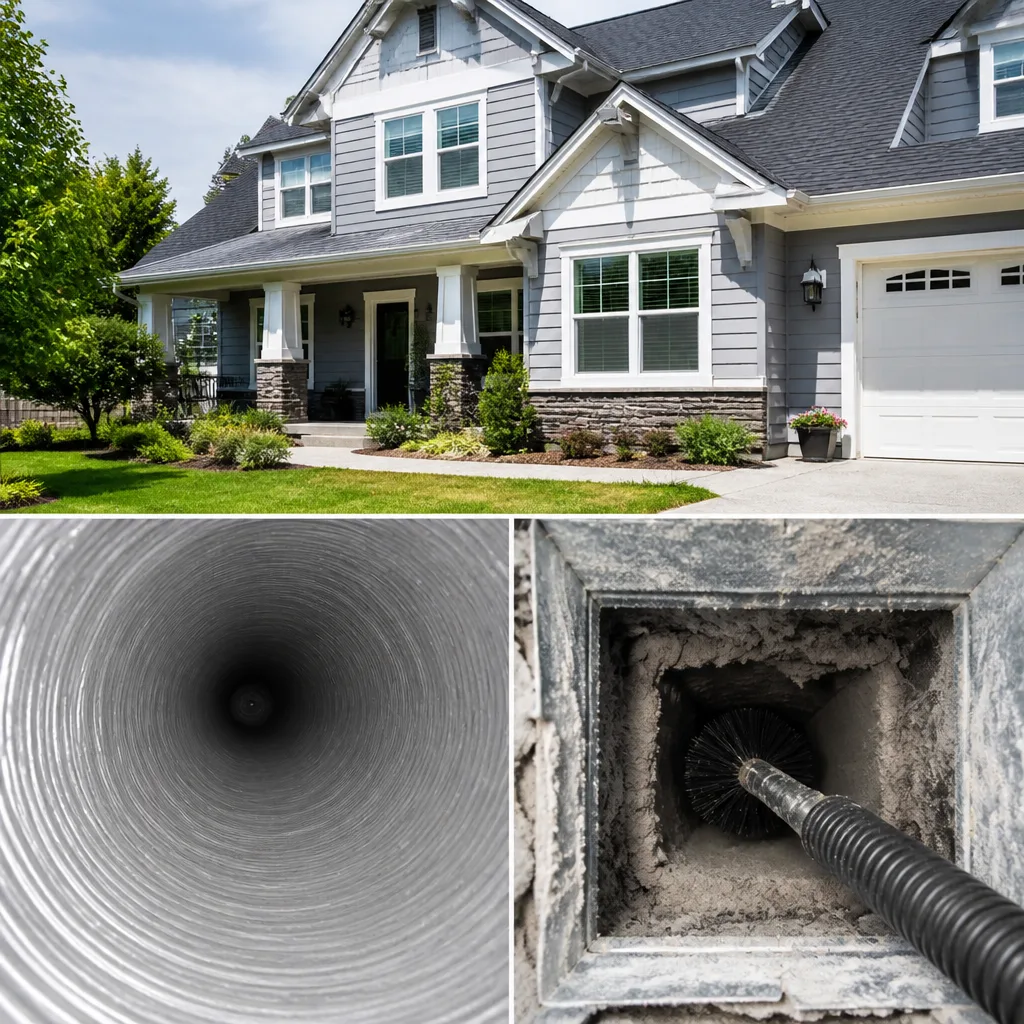 Whole-home duct cleaning
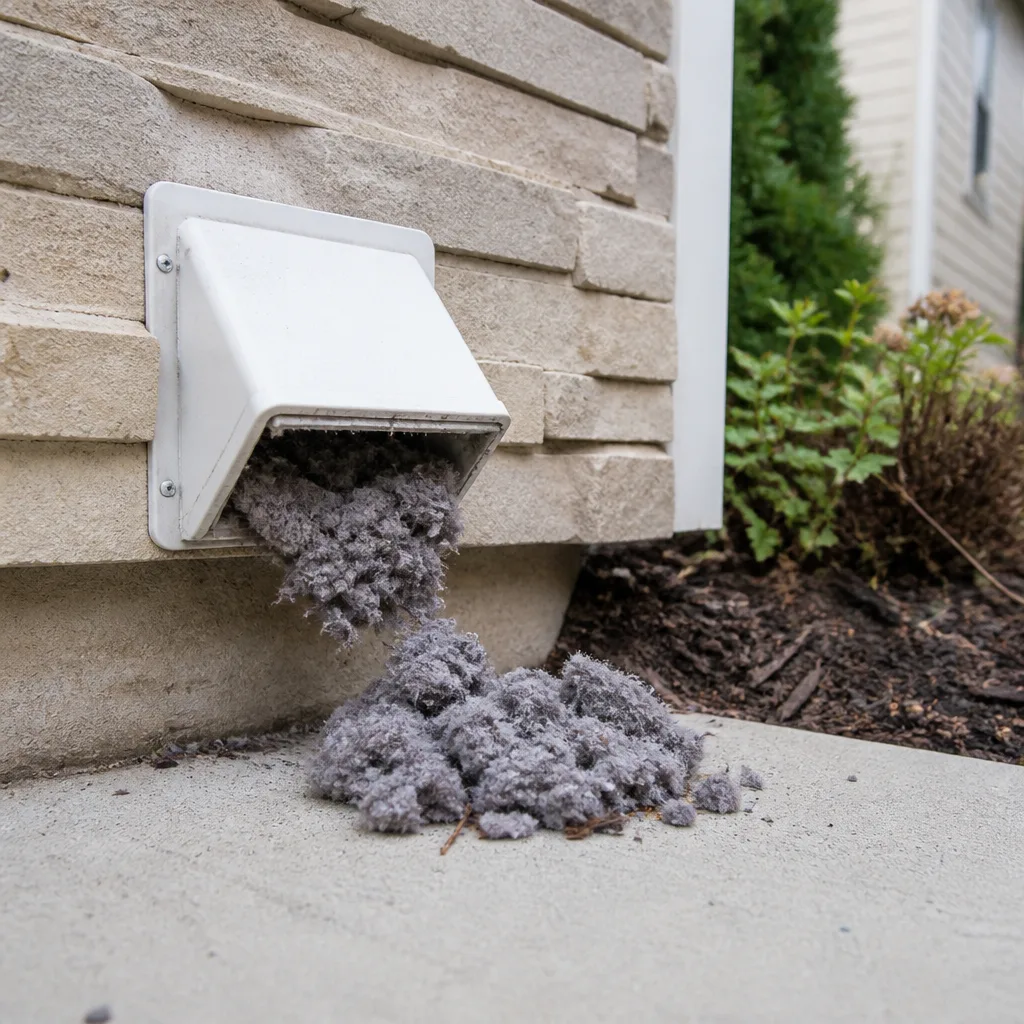 Dryer vent cleaning
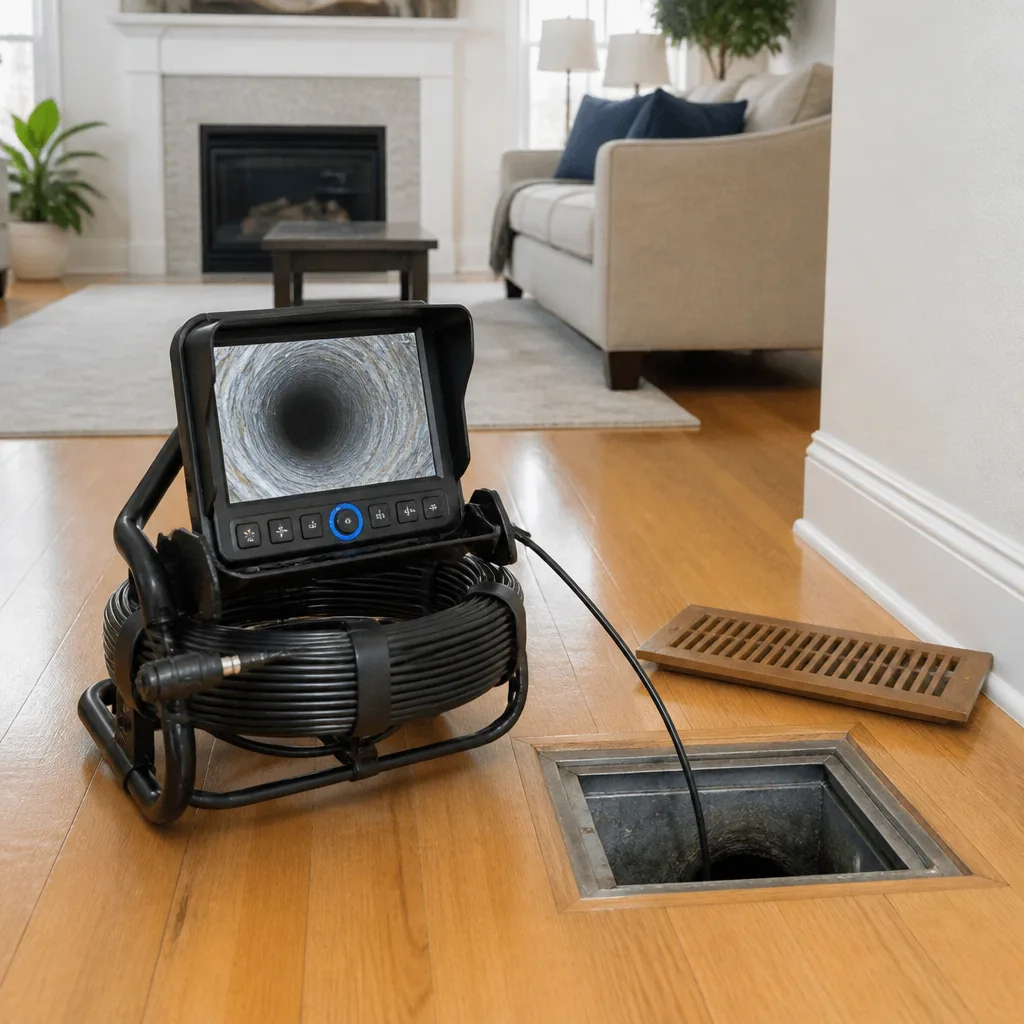 Camera inspection
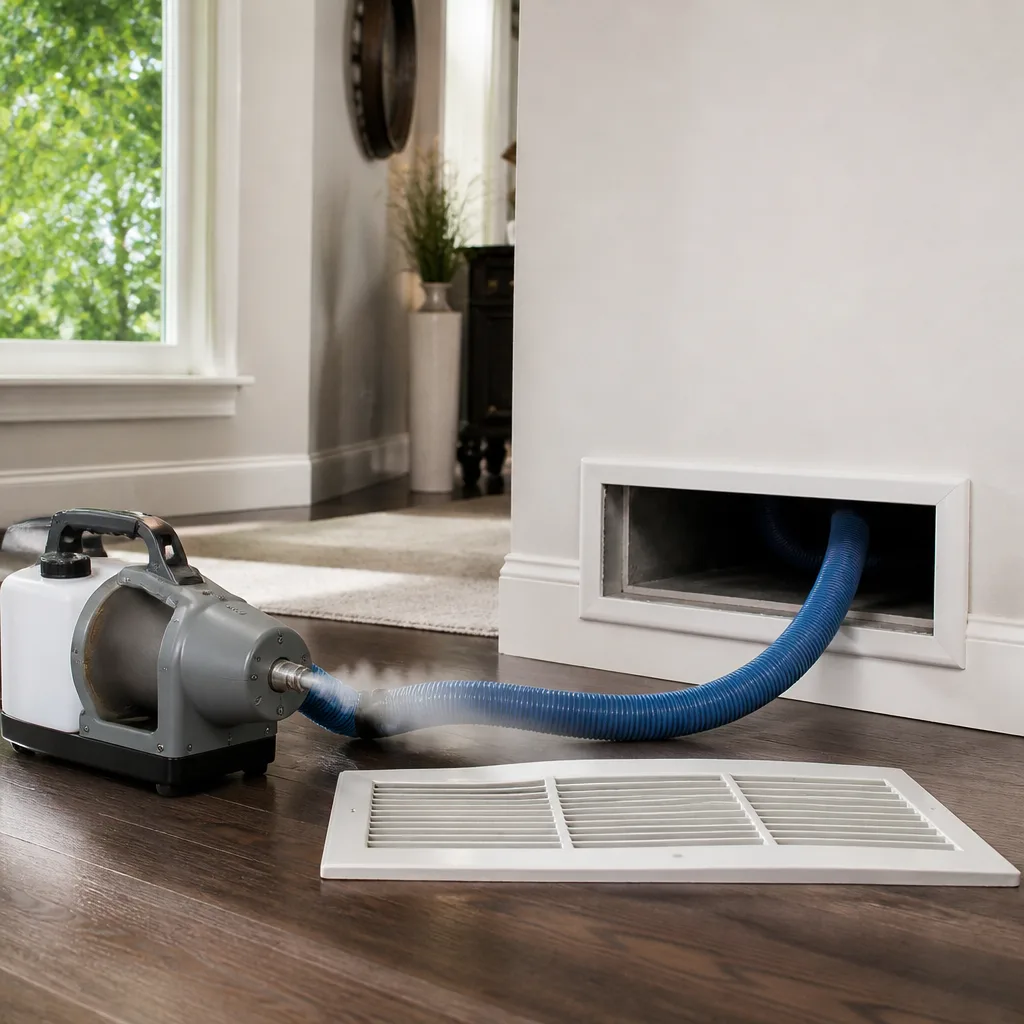 Sanitizing & deodorizing
Whole-system duct and dryer vent check with before-and-after photos - you see exactly what came out of your vents
That "$99 whole-house special" is a bait ad - the real number appears once they are in your hallway, or the "clean" is a shop-vac at the register. We photograph the inside of your ducts before and after instead.
Air Duct Cleaning Warning Signs: A Park Santiago Homeowner’s Reference Guide
Most people blame the thermostat, the equipment, or the season. The thermostat is usually fine. The equipment is usually fine. What’s failing is the network of ducts running through the walls, attic, and crawlspace, and it has been failing quietly since the day the house was built. A disconnected flex run, a crushed elbow, a leaking seam at a plenum, a coil growing mold behind the access panel: these things don’t trigger a diagnostic code. They just make one room hot, the air dusty, and the bill higher than it should be. This guide walks through what to look for, how to read each symptom, and what each one usually points to in a Park Santiago home.
Quick Answer
The warning signs of a duct system problem are visible dust on registers, uneven room temperatures, musty or burnt odors, rising utility bills without equipment changes, and visible debris or pest activity at vents. Most of these symptoms get misread as HVAC, allergy, or aging-home issues, which delays the right fix. In our experience, the majority trace back to contamination, disconnection, or leakage somewhere in the duct system itself, not to the furnace or air conditioner.
Styles & brands we work with
- Whole-home duct cleaning
- Dryer vent cleaning
- Camera inspection
- Sanitizing & deodorizing
Table of Contents
- Visible Dust: Settling vs. Active Contamination
- Temperature Variance Between Rooms as a Diagnostic Tool
- Musty and Burnt Odors Mapped to Their Source
- Why Utility Bills Rise When Equipment Hasn’t Changed
- Allergy Symptoms That Track With the HVAC Cycle
- What to Check Before You Call a Contractor
- The Dryer Vent Warning Signs People Miss
- When to Call a Professional
Visible Dust: Settling vs. Active Contamination
Dust on a return register is not automatically a red flag. Some dust is normal. Homes produce it. Furniture sheds it. Carpet fibers break down. Skin cells slough off. That dust settles on every horizontal surface in the house, and registers are horizontal surfaces. A fine, uniform film of gray dust that you can wipe away with one pass of a cloth is not the warning sign. What matters is the character, volume, and frequency of what’s coming out.
Active upstream contamination looks different. It shows up as discharge, not settling. The distinction matters because it tells you whether the dust is being produced inside the room (normal) or is traveling through the system (a problem).
How to tell them apart
- Settling dust: fine, even, light gray, returns slowly over weeks. Wipes off clean. No odor. No visible particles in the air when the system comes on.
- Discharge from an active duct: heavier, uneven, sometimes fibrous or dark. Returns within days of cleaning. Visible particles floating in the air when the system first kicks on. Often paired with a stale or dusty smell.
- Particulate-heavy air at a specific register: when one register in the house blows noticeably dirtier air than the others, the contamination is localized to that branch of the system, not the whole house.
- Dust streaks radiating from a register: air movement at the edges of the grille is pulling dust through the gap. This is often a sign of inadequate return-air pressure or a poorly sealed boot behind the wall.
- Black ring around the ceiling diffuser: a classic sign of air bypassing an undersized opening, driving dust into the surrounding drywall. Common in homes where a previous owner added a room without resizing the ducts.
If the discharge pattern is on the return side rather than the supply side, the contamination source is usually closer to the air handler. Dust is being pulled through a dirty filter or a leaky return plenum and deposited downstream. In Park Santiago homes with older flex duct in the attic, we’ve found ruptured inner liners that shed plastic flakes into the airstream, which register as visible grit on the supply registers. That’s a duct problem, not a cleaning problem, and it needs repair, not just a vacuum.
For a homeowner trying to interpret what they’re seeing, the practical test is this: clean one register with a damp cloth, note the date, and check it again in a week. If it comes back gray and light, it’s settling. If it comes back heavy, dark, or fibrous, the system is blowing it there.
Temperature Variance Between Rooms as a Diagnostic Tool
If one room is consistently four to six degrees warmer than the rest of the house, the problem is not the thermostat or the equipment. The equipment is heating and cooling at spec. The problem is that the conditioned air isn’t arriving where it’s supposed to. A disconnected, kinked, or crushed flex duct run will produce exactly this symptom: one room starved of air, the rest of the house normal.
This is the single most underdiagnosed duct problem we see. Homeowners call about a hot bedroom and are told to rebalance the dampers or add a return. Sometimes that helps. Often the real cause is a run that came loose at a collar years ago and has been bleeding conditioned air into the attic every time the system has run since. The air handler works harder, the bill goes up, the room stays warm, and nobody has looked at the duct run itself because you can’t see it from the living room.
How to use temperature variance as a diagnostic
- Close all windows and exterior doors. Leave all interior doors in their normal position.
- Run the system for at least twenty minutes so it reaches steady state.
- Take a temperature reading at the center of each room, about four feet off the floor, using an instant-read thermometer or a kitchen thermometer.
- Write the numbers down. Note which room is the outlier and by how much.
- Check the register serving that room. Is the airflow noticeably weaker than the registers in the rooms that read normal? Weak airflow plus temperature variance points to a duct problem, not a balancing problem.
- Look at the supply run at the register boot. If you can access the attic or crawlspace, check the flex duct connection at the boot and at the main trunk.
A room that’s cold in summer and hot in winter, with weak airflow year-round, is almost always a supply run issue. A room that’s only off in one season is more likely to be a balancing or equipment problem. That distinction saves homeowners from spending money on the wrong solution.
Two-story Park Santiago homes tend to show this on the upper floor. Long, twisting flex runs to the second story lose static pressure as they go, and a single disconnected joint in the attic can starve an entire bedroom. In our experience, a full-system air duct cleaning visit that also checks connections will find a disconnected run on a large share of homes with this complaint. If you’re only cleaning without checking connections, you’re leaving the actual cause untouched.
Musty and Burnt Odors Mapped to Their Source
Smell is a diagnostic tool most homeowners underuse. Different duct system problems produce recognizably different odors. Once you know the map, you can narrow down the likely cause before anyone touches a screwdriver.
Musty, damp, or wet-cardboard smell
Most often the evaporator coil or the drain pan. In Park Santiago’s mild climate, condensate sits in the pan and on the coil between cooling cycles, and if drainage is slow or the coil hasn’t been cleaned, biological growth establishes itself on the fins. The air picks up that smell every time the blower runs. The second most common source is a wet section of duct insulation, usually where a seam or a section of flex duct has been sitting against a cold surface long enough to condense. A cleaning-only visit won’t fix either of these; you need eyes on the coil and the insulation.
Burnt, hot-dust, or metallic smell
This is the one to take seriously. A burnt smell at the start of a heating cycle that fades after a couple of minutes is usually dust burning off the heat exchanger. A burnt smell that persists, or that’s paired with any unusual noise from the furnace, deserves a heating inspection before you run the system again. Dust accumulated near the heat exchanger or on the burners is a combustion safety issue. We don’t recommend homeowners open a furnace cabinet to investigate this themselves; that work belongs to a trained technician.
Pet, pest, or urine smell
Rodents and insects find their way into return ducts and attic runs, particularly in homes with gaps at the foundation or at the roofline. The odor tends to be strongest at a specific register or concentrated in one zone. If pest intrusion is confirmed, cleaning is only part of the fix; the entry points need to be sealed or the problem returns. That’s why duct repair and sealing sits alongside cleaning in a proper scope of work.
Chemical or solvent smell
Sometimes a new piece of furniture, paint, or flooring offgasses and the smell travels through the return. Not a duct problem in most cases. But if the smell persists after the source is removed and the house has been aired out, it’s worth checking whether the return is pulling air from a basement, garage, or attic space it shouldn’t.
Mapping odor to source matters because it determines the intervention. A musty smell from a coil doesn’t get fixed by cleaning ducts alone; a burnt smell from a heat exchanger doesn’t get fixed by sanitizing. Getting the diagnosis right the first time is cheaper than three rounds of the wrong work. Our full-system approach includes HVAC cleaning specifically because the coil and heat exchanger side of the system is where a lot of odor originates.
Why Utility Bills Rise When Equipment Hasn’t Changed
When a homeowner tells us the bill has climbed 20, 30, 40 percent over the last two summers with no new appliances, no new windows, no change in habits, they usually suspect the air conditioner or the furnace. Sometimes they’re right. But in a system that’s otherwise well-maintained and blowing cold, the more likely cause is duct leakage, and it’s a bigger number than most people realize.
Ducted systems leak. The question is how much. Seams pull apart, tape dries out, mastic cracks, and flex runs slip off collars. Every leak in a supply duct pushes conditioned air into an unconditioned attic or crawlspace where it cools off (or heats up) and never reaches a room. Every leak in a return duct pulls unconditioned air into the system and forces the equipment to work harder to hit the thermostat setpoint. The equipment is doing its job. It’s just working on air that half of it never delivers.
How to read the bill as a symptom
- Bill rises without a rate increase: the system is running longer to reach setpoint, almost always a delivery problem.
- Bill rises and one room is noticeably off: duct disconnection or crush, not equipment inefficiency.
- Bill rises and the system short-cycles: usually a pressure problem, often caused by undersized returns or blocked filters, not duct leakage alone.
- Bill rises and the filter clogs fast: debris in the system or a return pulling from a dirty space (attic, crawlspace, garage).
- Bill rises with no visible symptom at all: hidden leakage in the attic or crawlspace runs, common in older Park Santiago homes where flex duct has been in place for years.
In our experience, duct repair and sealing is the step most cleaning-only companies skip. Cleaning removes what’s inside the duct; sealing stops the leak that’s been wasting conditioned air. The two go together. A system that’s clean but leaky will still run inefficiently. A system that’s sealed but dirty still spreads contaminants. That’s why we treat Air Duct Cleaning Park Santiago as a full-system service, not a one-pass vacuuming job.
Before assuming equipment replacement, a proper duct inspection and a pressure check will tell you where the loss is happening. That’s cheaper than a new condenser, and it addresses the actual cause.
Allergy Symptoms That Track With the HVAC Cycle
The tell for a duct system allergy problem is timing. Seasonal allergies track with outdoor pollen. Duct-related symptoms track with the HVAC cycle. If the sneezing, congestion, or eye irritation ramps up within an hour of the system starting and settles when it stops, the air being delivered is the problem, not the outdoor air being pulled in.
This pattern is common in Park Santiago homes, especially in older homes with flex duct in the attic where dust and debris have accumulated in the low points of the runs. Every time the blower runs, that debris gets lifted and distributed through the house. It’s not visible at the register most of the time, but the particulate count in the room goes up.
Symptoms that track with the HVAC cycle
- Congestion or sneezing that begins shortly after the system starts and improves when it stops.
- Morning symptoms worse on days when the heat or AC ran through the night.
- Irritation that’s worse in one room than the rest of the house (particularly a bedroom over a garage or at the end of a long run).
- Headaches or fatigue that track with time spent in a specific room rather than with outdoor pollen counts.
- Symptoms that improve during a vacation away from the house and return within a day of coming home.
If the pattern fits, the next step is a proper inspection of the duct system and the air handler, not another air purifier. Standalone purifiers treat the air in one room. They don’t address the source. If filtration is part of the solution, it belongs at the air handler, which is where Honeywell and Aprilaire integration comes in: a properly sized filter and humidity control at the system level addresses the whole house, not one corner of it.
We don’t make medical claims. If a homeowner is being treated for allergies or asthma, that’s between them and their doctor. But the environmental side of the conversation is ours, and a duct system that’s dispersing debris every time it runs is an environmental problem worth solving.
What to Check Before You Call a Contractor
A few simple, safe checks before you call give a technician a running start on diagnosis and often save a return visit. These are all do-it-yourself safe: no opening equipment cabinets, no touching wiring, no getting on the roof. If you find something that requires more than looking, stop and call.
Homeowner-level inspection steps
- Photograph every register. Note the date and time. Check again in a week and compare. This is the easiest way to tell settling dust from active discharge.
- Take room temperatures. Instant-read thermometer, center of the room, four feet up. Write them down. A 4-6 degree outlier is diagnostic.
- Listen at the air handler. A rattle, a whoosh, or a whistle at startup can indicate duct pressure problems or a loose plenum connection.
- Check the filter. Note the last replaced date. A filter that clogs in under a month is a sign of debris upstream, not a sign you need a more expensive filter.
- Smell the registers. Musty, burnt, or pest odors on any specific register narrow the source to that zone.
- Look at the attic access and crawlspace access. If you can safely shine a light in, note any visible disconnected flex runs or crushed sections. Don’t crawl in; just look.
- Check the outdoor unit for debris. Leaves, dirt, and yard clippings packed against the condenser reduce efficiency and can mimic duct problems.
- Note when the symptom starts. HVAC cycle, outdoor weather, time of day. The pattern is worth more than the symptom.
When you do call, have your notes in hand. The technician can skip the parts of the visit they’d otherwise spend establishing the baseline and go straight to the likely cause. That’s not a shortcut for the technician; it’s better information for everyone.
What not to do: don’t pull duct registers off the wall and reach into the duct with a shop vac. Loose tape at the register boot and flex duct inner liners tear easily. A shop vac’s standard filter will also blow fine dust back into the room rather than capture it, which is the opposite of what you want. And don’t open a furnace cabinet or an electrical panel to “check” anything; those are safety-critical components and belong to a trained professional.
The Dryer Vent Warning Signs People Miss
Dryer vent problems don’t show up in the duct system diagnostics above, but they’re part of the same forced-air household and they carry a life-safety dimension the other problems don’t. Lint is highly combustible. A dryer vent with heavy lint buildup is a residential fire risk, and the warning signs are easy to spot once you know them.
Signs of dryer vent trouble
- Clothes take longer than one cycle to dry, and the cycle time has been creeping up.
- The dryer feels hot to the touch on the outside of the cabinet, especially near the top or the back.
- The laundry room stays humid, or lint smell lingers after a cycle.
- The exterior vent flap doesn’t open fully or doesn’t open at all when the dryer runs.
- Lint visible around the vent opening outside, or a bird or insect nest inside the vent cap.
- The flexible transition duct behind the dryer is crushed, kinked, or visibly full of lint.
If any of these are present, the dryer vent needs cleaning and possibly the vent run needs to be rerouted or shortened. That’s why dryer vent cleaning is a standalone service in our lineup, not an add-on to duct cleaning. In a lot of homes, the dryer vent run is longer and more convoluted than the ductwork and it gets checked far less often. Both matter.
Common Mistakes to Avoid
- Assuming the HVAC equipment is the problem because it’s the visible system. The furnace and air conditioner are the most expensive components and the most obvious suspect, so homeowners go straight to an equipment replacement quote. In a well-maintained system with a rising utility bill, checking duct leakage first often saves the equipment replacement. A pressure check costs a fraction of a new system.
- Booking a cleaning-only company and expecting them to catch a disconnected duct. Cleaning-only services vacuum what’s inside the duct. They don’t necessarily open access panels or inspect connections. If your symptom is one hot room, ask specifically whether the quote covers duct inspection and repair. If it doesn’t, the actual problem stays.
- Replacing the filter with a higher MERV rating to fix dust. A higher-rated filter can restrict airflow and increase static pressure, which makes the delivery problem worse. Filtration at the air handler is a system-design question, not a filter-shopping question. Honeywell and Aprilaire product lines exist for exactly this reason.
- Mistaking a musty smell for a cleaning issue. Musty air usually comes from the evaporator coil or a wet section of duct insulation. Cleaning the ducts doesn’t fix a mold problem on the coil. You need an HVAC-side inspection to source the smell, then the right intervention.
- Skipping the dryer vent because the ducts are being done. The dryer vent is a separate run with a separate safety profile. Lint fires don’t care that the air ducts are clean. Do both, or at least have both inspected.
- Ignoring the “one room is warm” symptom because it’s been that way for years. Years of one warm room usually means years of a disconnected or crushed duct run, and years of paying for conditioned air that’s being dumped into an attic. Getting a diagnosis is cheap. Continuing to pay for the leak is not.
- Choosing a company based on the lowest quote without asking what’s in scope. If a duct cleaning quote doesn’t specify the equipment (Rotobrush mechanical agitation plus Nikro negative-pressure extraction, for example), the access points they’ll open, and whether containment is part of the setup, it’s not a comparable quote. Ask what machine is being used and how the debris is being captured.
See the difference
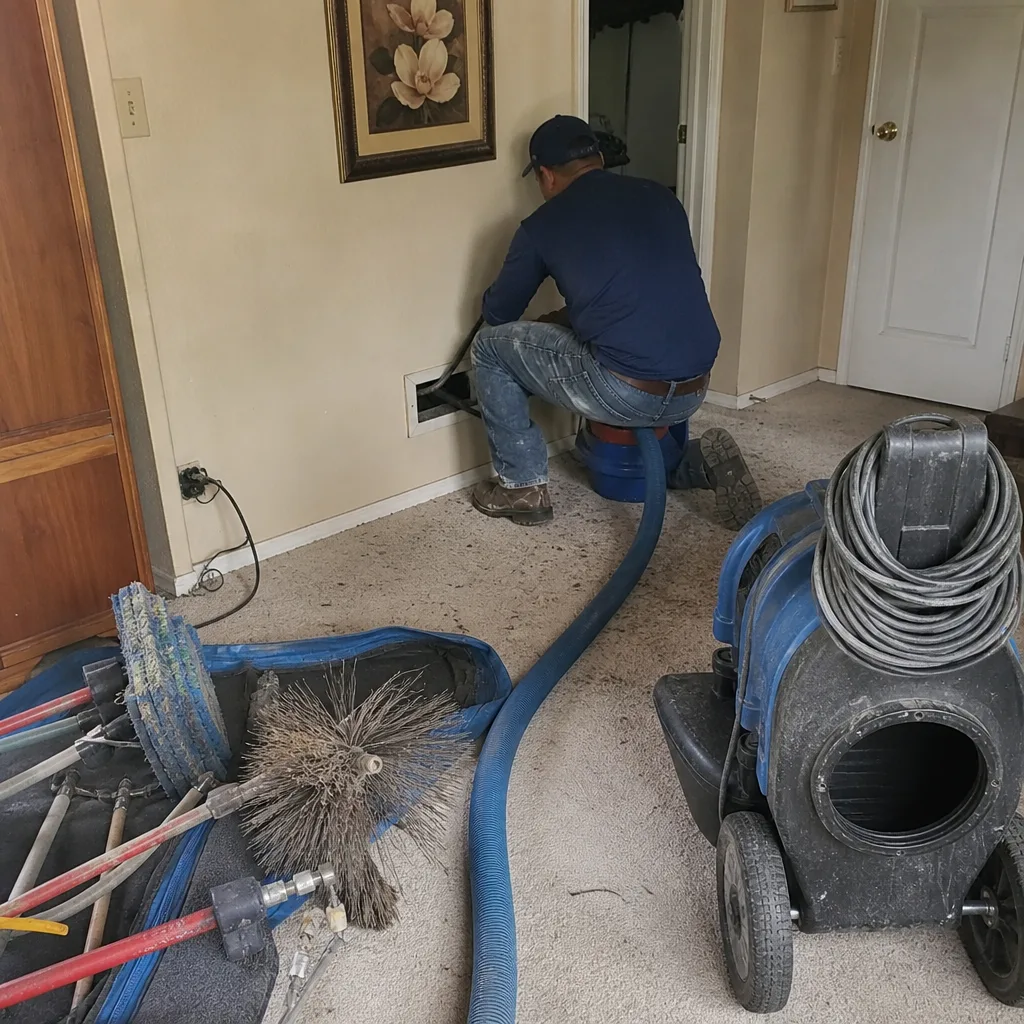 Before
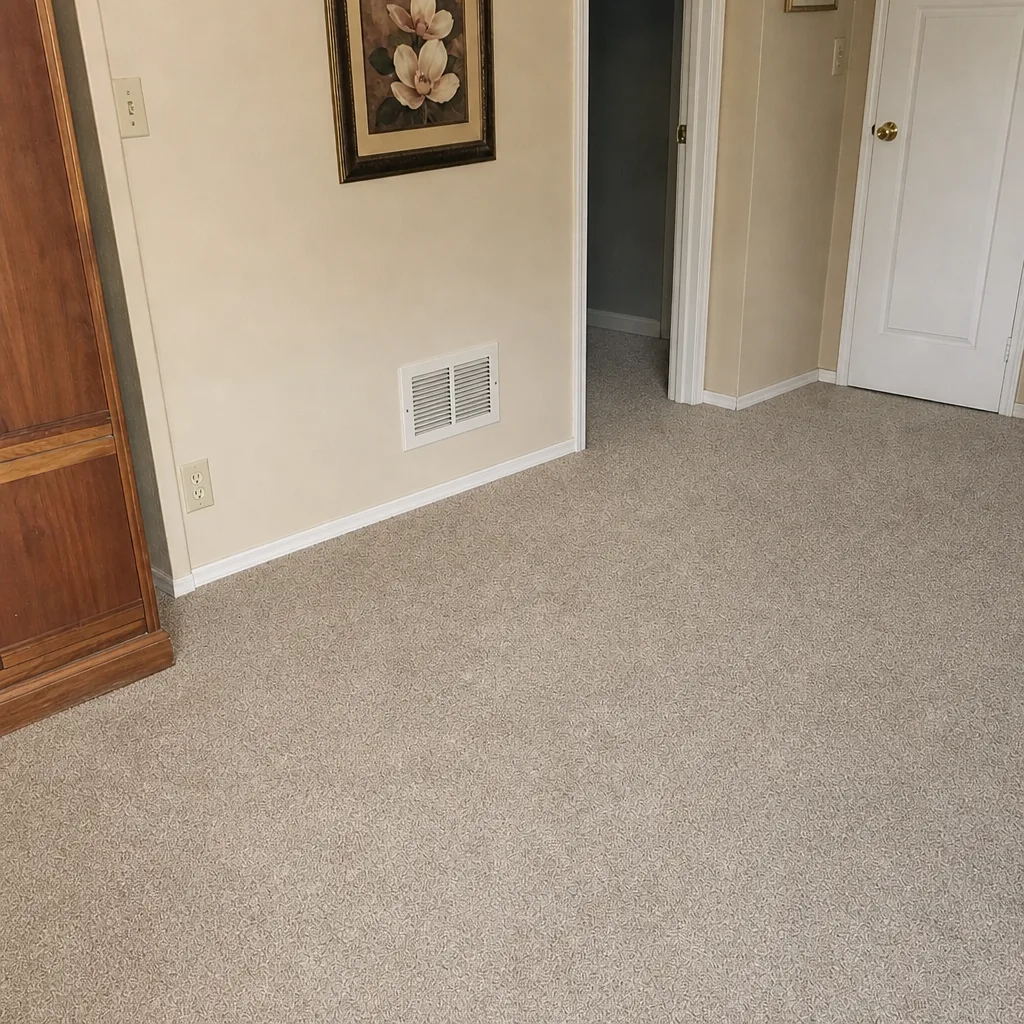 After
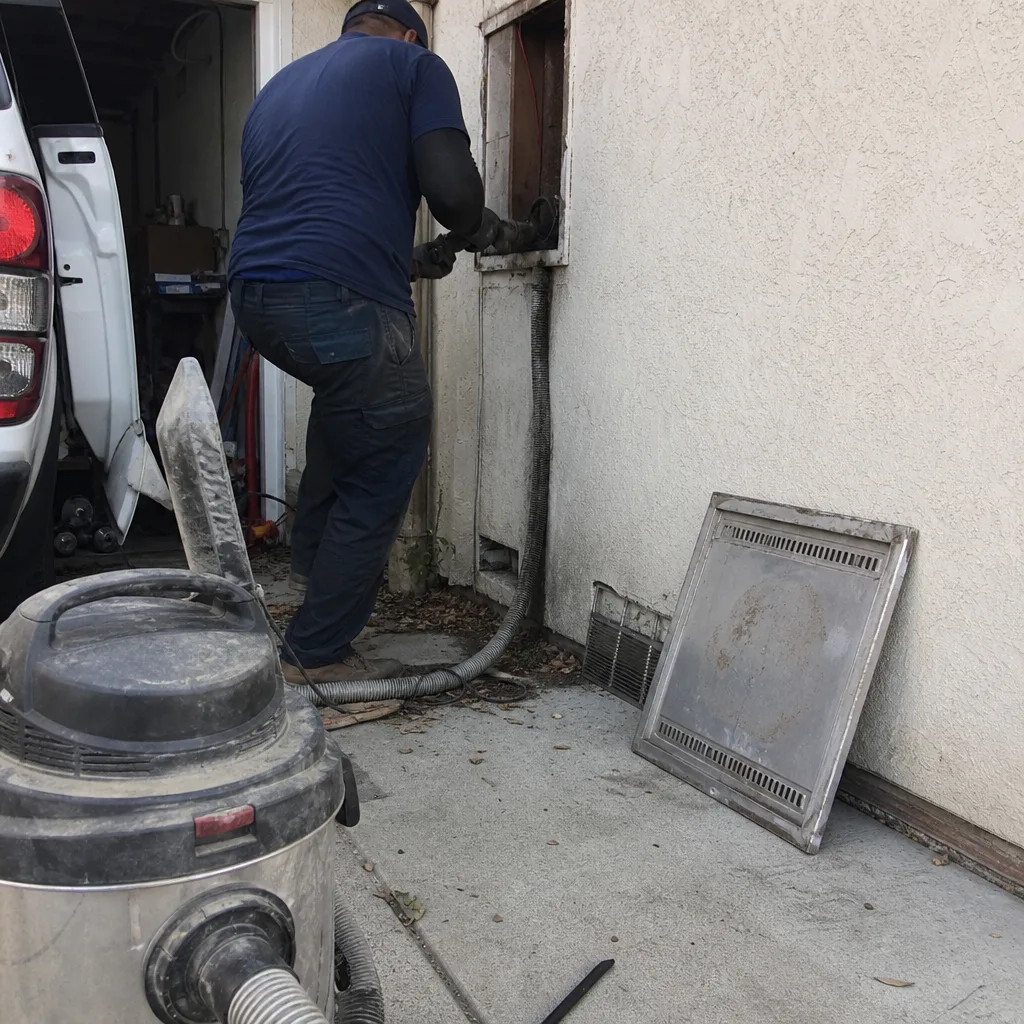 Before
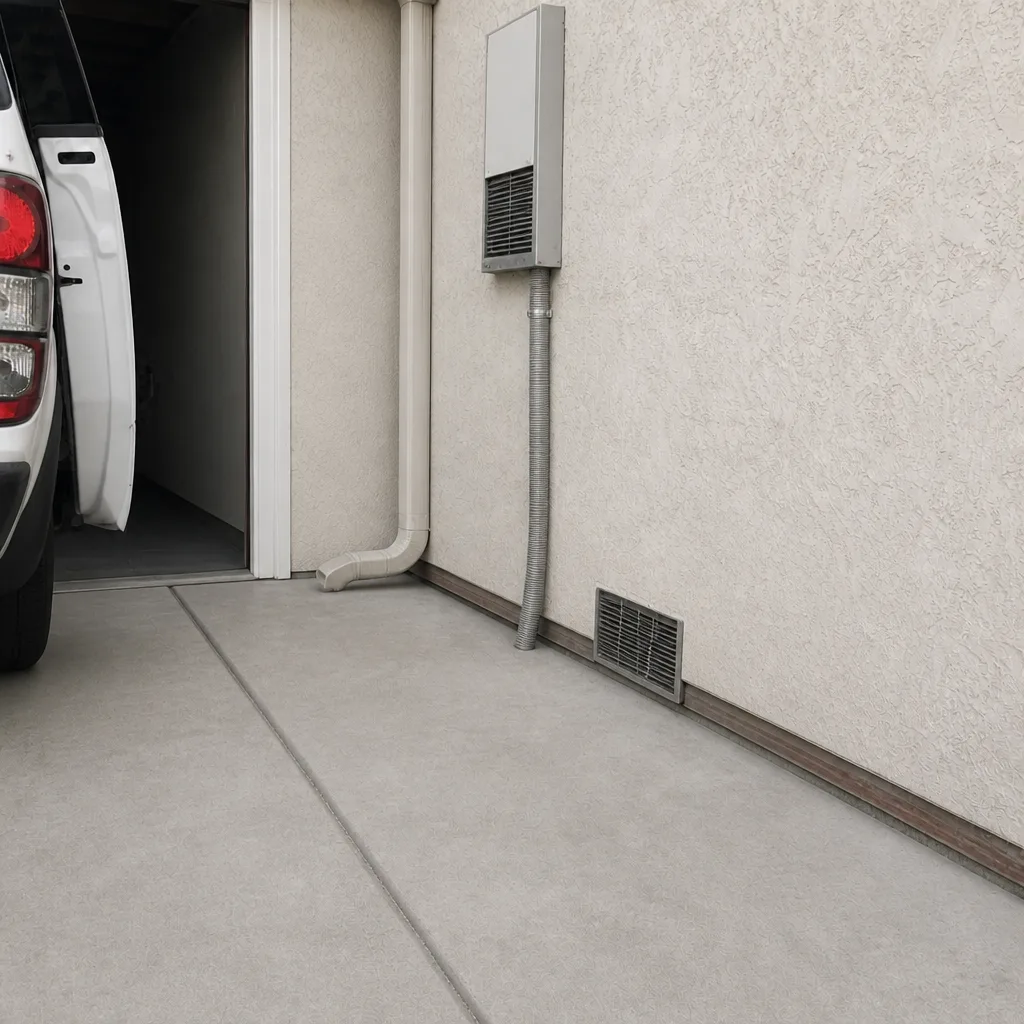 After
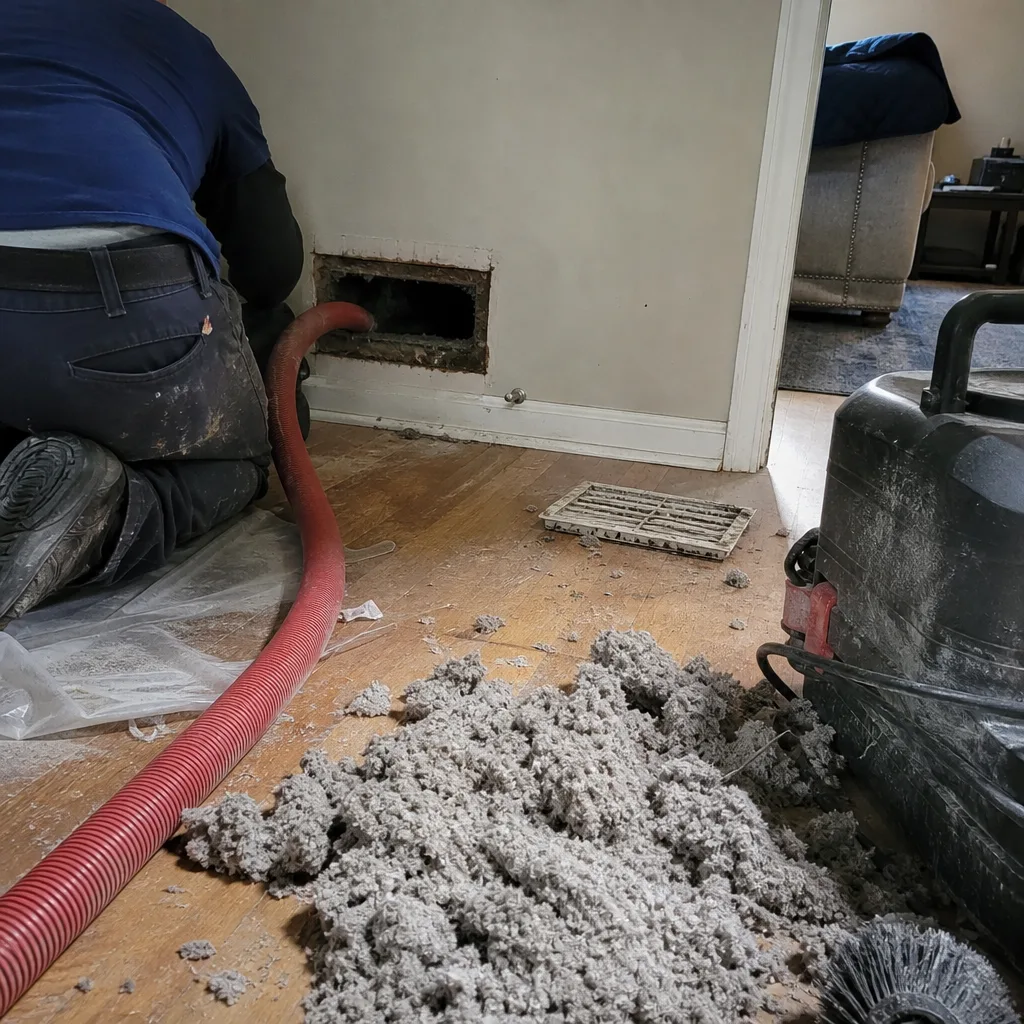 Before
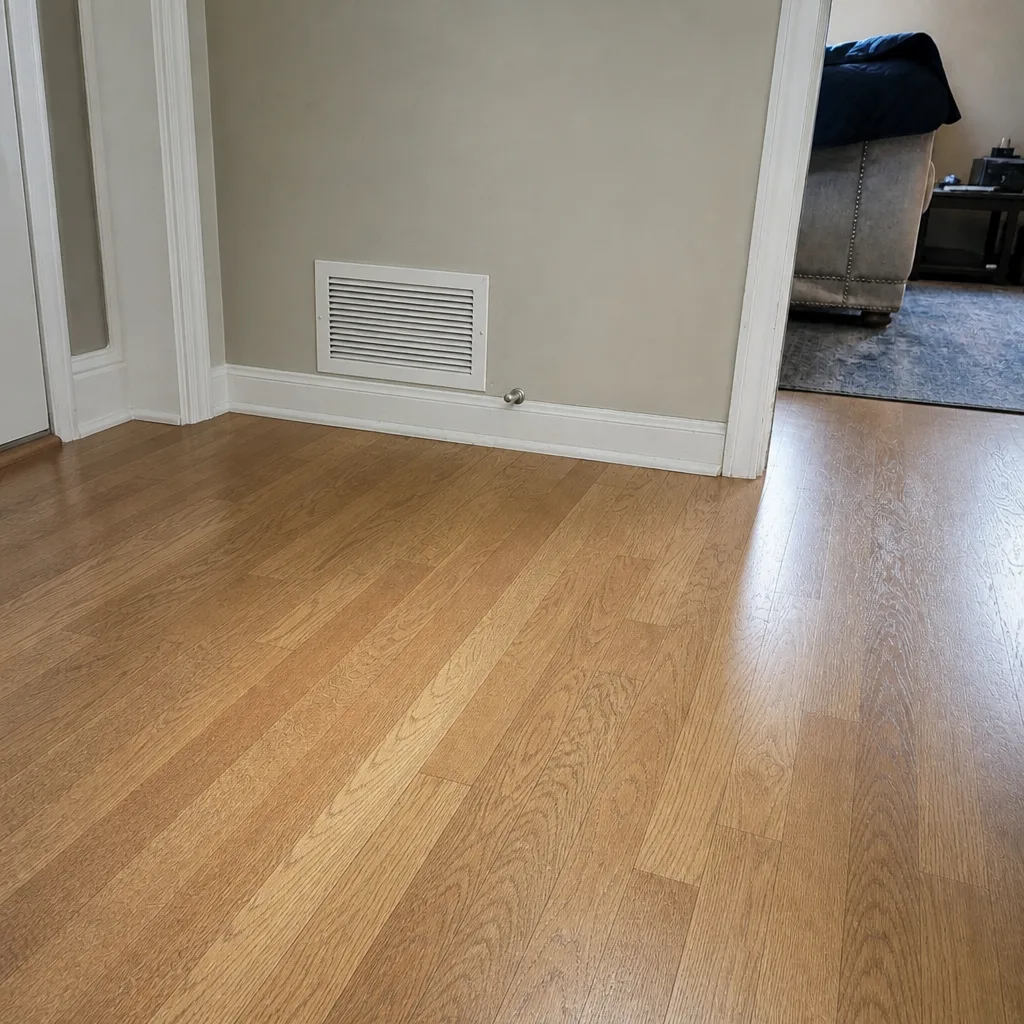 After
When to Call a Professional
Call a professional when you’ve done the homeowner-level checks and either the pattern doesn’t resolve or the pattern is clear and it points to the duct system. Specifically: a room that’s four to six degrees off with weak airflow, a register that discharges visible debris within a week of cleaning, a musty smell that comes back after the filters are changed, a burnt smell at any point during a heating cycle, a utility bill that has climbed with no equipment changes, confirmed or suspected pest activity in the ducts, or a dryer that takes more than one cycle to dry a normal load. These are the situations where a proper inspection, cleaning, repair, and sealing scope is the answer, not another filter swap or a new air purifier.
Air Duct Cleaning Park Santiago offers free estimates in Park Santiago. Call (844) 625-7040. We answer 24/7. Fast dispatch from 7am to 7pm, Sunday through Friday. Our technicians have up to 9 years of experience and use professional equipment from Rotobrush, Nikro, Abatement Technologies, and Guardsman, including the same negative-air containment approach used in commercial remediation work.
Frequently Asked Questions
The tell is whether the problem is inside the duct or at the duct. Visible discharge from registers, musty odors, and heavy dust in the return indicate cleaning is needed. Temperature variance between rooms, whistle or rattle at the air handler, and rising utility bills without equipment changes indicate repair and sealing is needed. Most Park Santiago homes with a full symptom set need both, and that’s why the work should be scoped together. Call (844) 625-7040 for a free estimate.
No. A room that’s consistently 4-6 degrees off with weak airflow is a duct problem, most often a disconnected or crushed flex run feeding that room. Thermostat settings and equipment output aren’t the cause. A proper inspection will find the run and confirm whether it can be reconnected or needs replacement. Call (844) 625-7040 to schedule an estimate.
Duct leakage is the most underdiagnosed cause in a well-maintained home. Supply leaks push conditioned air into the attic; return leaks pull unconditioned air into the system. Either way, the equipment runs longer to reach setpoint. Sealing the leaks is the fix, and it’s part of a full-system service, not a cleaning-only visit. Call (844) 625-7040 for a free estimate.
Most often the evaporator coil or a wet section of duct insulation. In Park Santiago’s mild climate, condensate sits on the coil between cooling cycles and biological growth establishes on the fins if the coil hasn’t been cleaned. Cleaning the ducts alone won’t remove a coil smell; the coil needs inspection. Call (844) 625-7040 to book a diagnostic visit.
No, not effectively and not safely. A shop vac’s filter blows fine particulate back into the room, and reaching into a duct at a register boot can tear the flex liner, making the problem worse. Professional cleaning uses equipment like Rotobrush for mechanical agitation and Nikro for negative-pressure HEPA extraction so the debris is dislodged and captured, not just stirred up. Call (844) 625-7040 to schedule.
Every two to three years for most homes, sooner if any of the warning signs in this guide are present. A home with pets, recent renovation, or confirmed pest activity should be checked annually. If you’re seeing symptoms now, don’t wait for the interval; schedule an inspection and get the diagnosis on record. Call (844) 625-7040 and we’ll set up a free estimate.
The Bottom Line
Most duct problems announce themselves through a small set of consistent signals: visible discharge at a register, uneven room temperatures, musty or burnt odors, and rising bills with no equipment changes. Each signal maps to a likely cause. The single biggest mistake is treating a duct problem as an HVAC problem and spending money on the wrong fix. Before you replace equipment, before you buy another air purifier, and before you book a cleaning-only service, get an inspection that covers the whole system. Cleaning, sealing, and drying vent work belong in the same scope of care. Our technicians have up to 9 years of experience and use professional-grade Rotobrush and Nikro equipment with Abatement Technologies containment on every job. Cleaner air starts with a closed, sealed, properly functioning duct system.
If you’ve read this far and you’re recognizing your own home in any of the sections above, the next step is a call. Air Duct Cleaning Park Santiago offers free estimates, and we’ll walk through what we find, what it means, and what the right scope of work is. Call (844) 625-7040. We answer 24/7. Fast dispatch from 7am to 7pm, Sunday through Friday.
Written by the team at Air Duct Cleaning Park Santiago.