
Last updated November 25, 2026
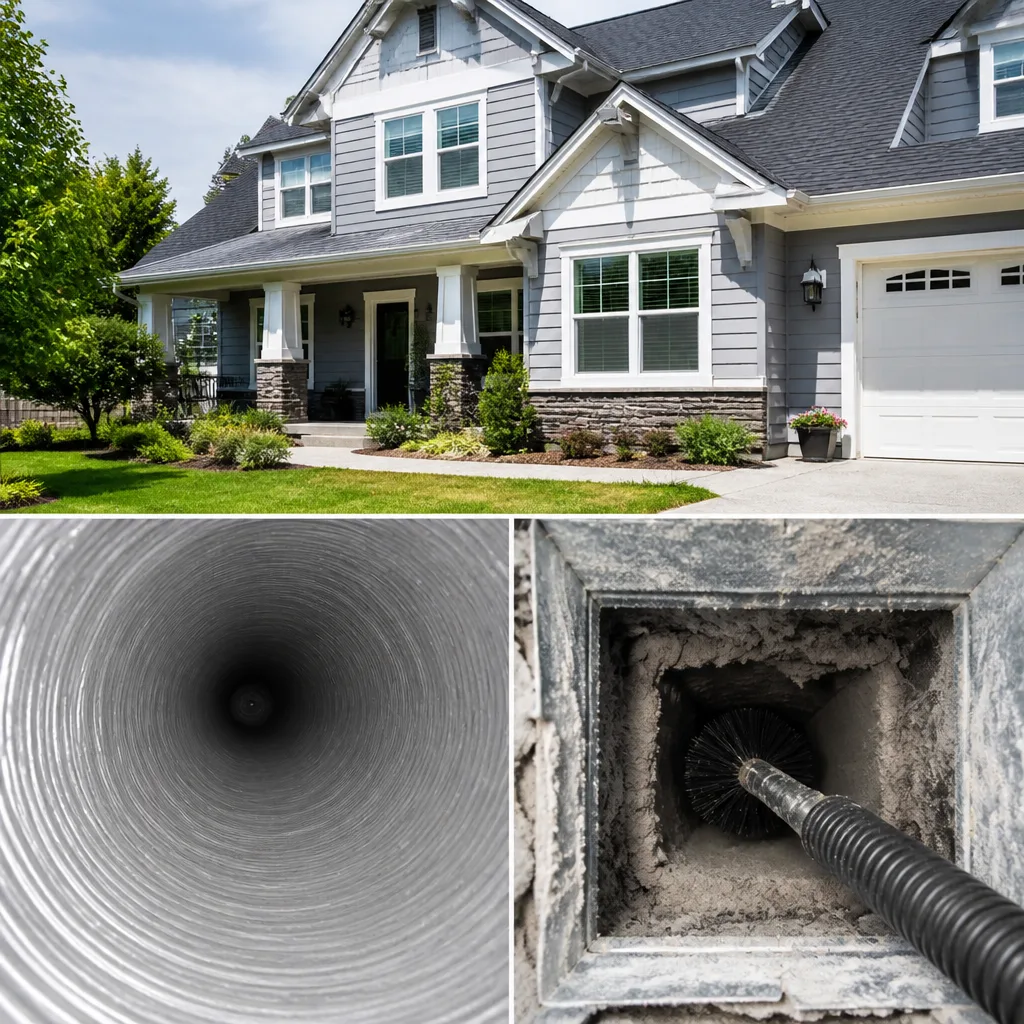 Whole-home duct cleaning
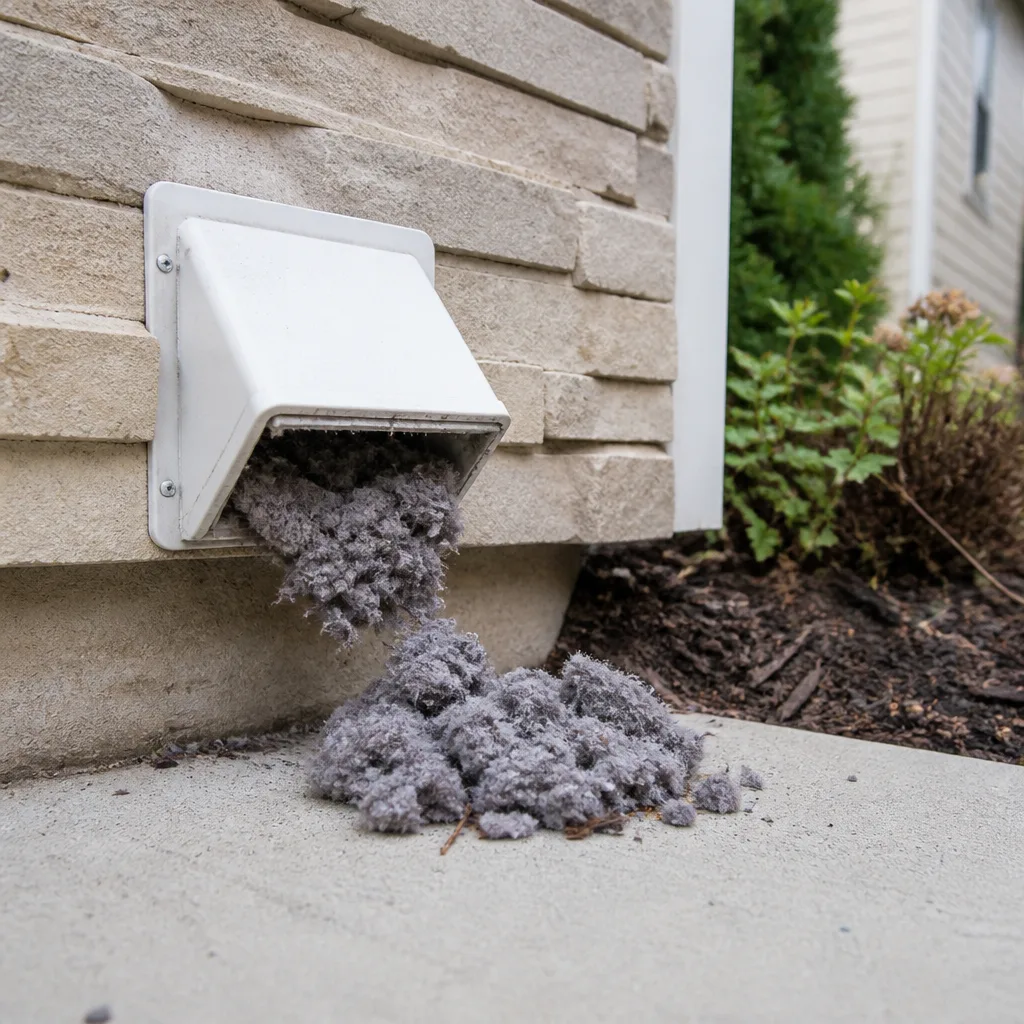 Dryer vent cleaning
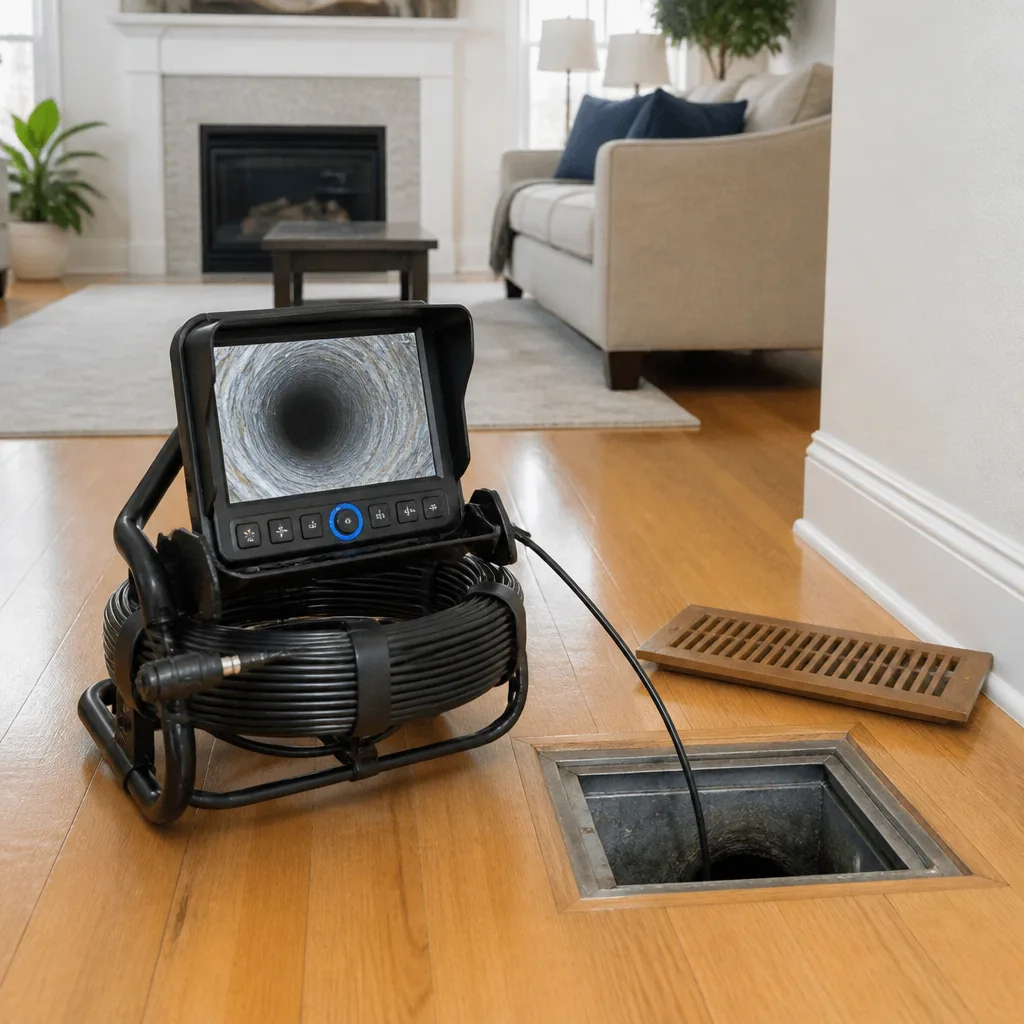 Camera inspection
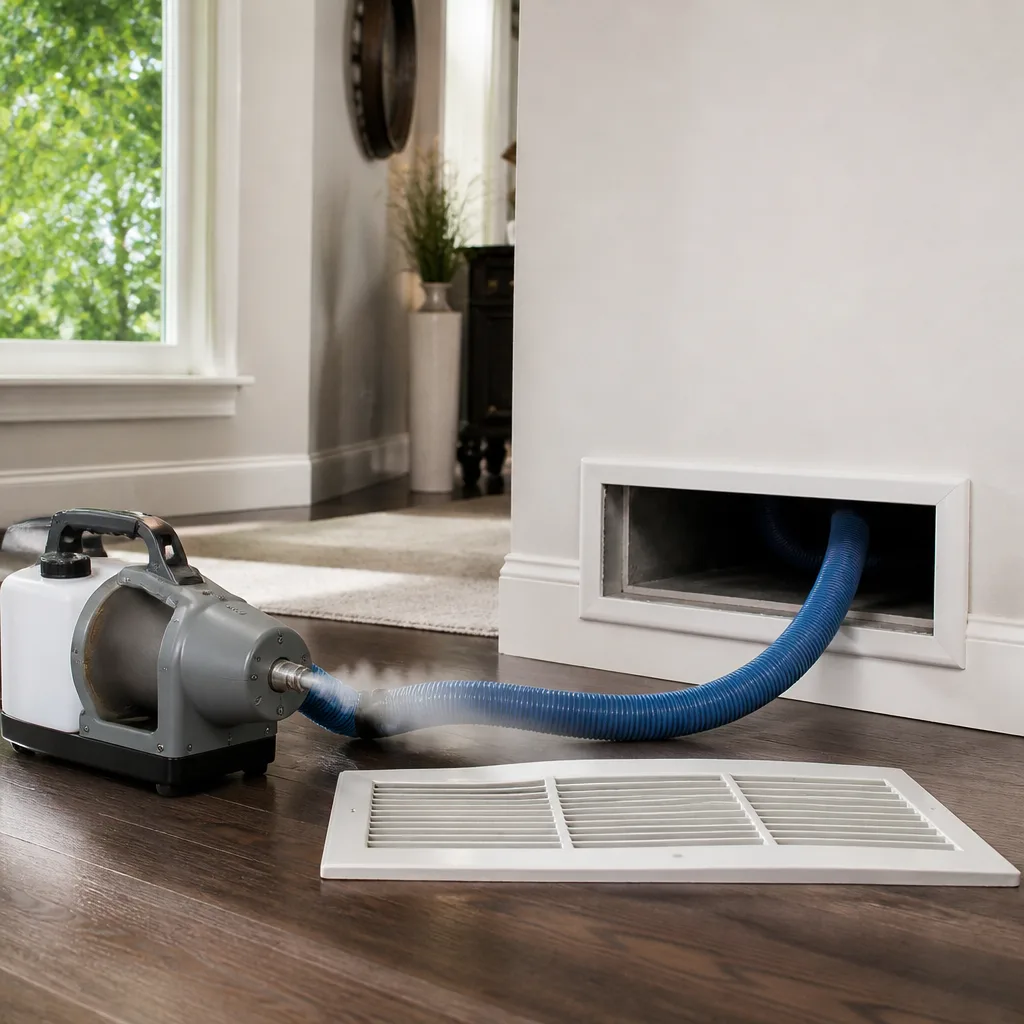 Sanitizing & deodorizing
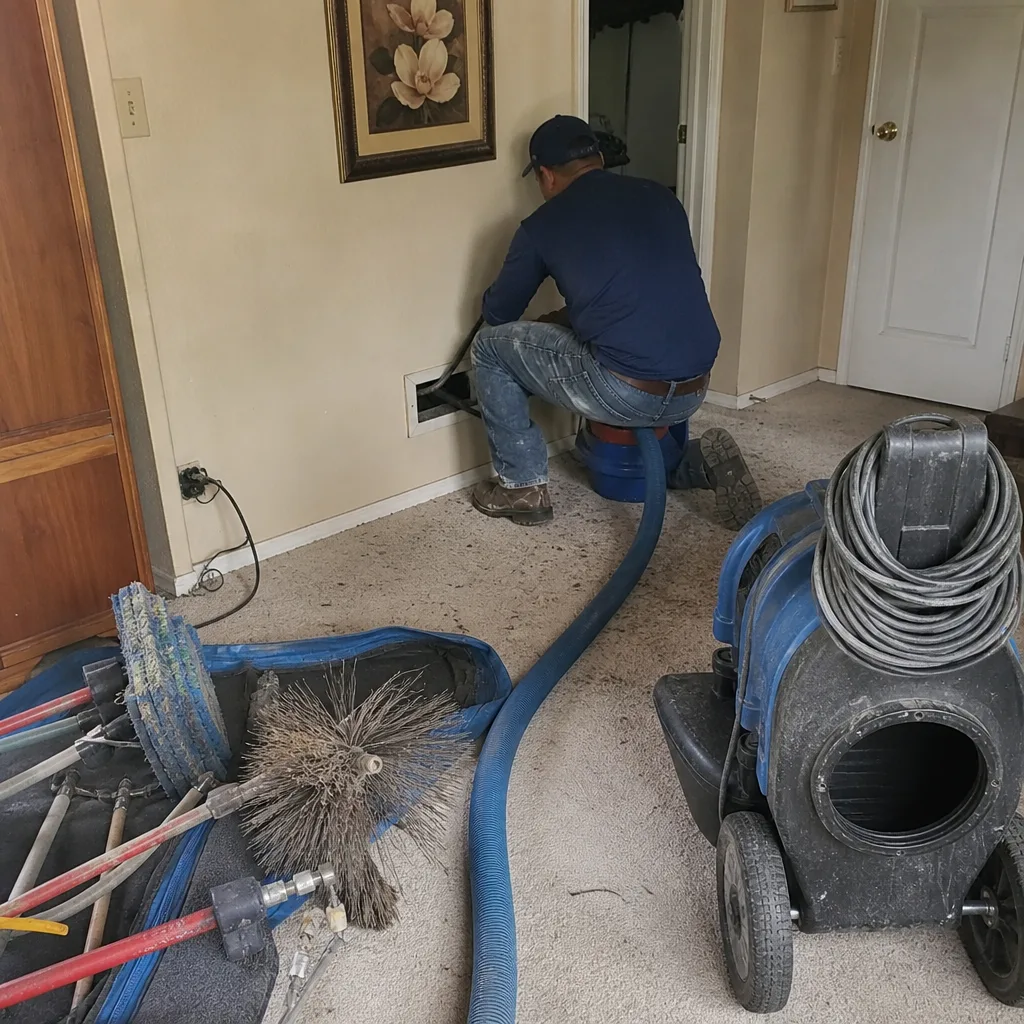
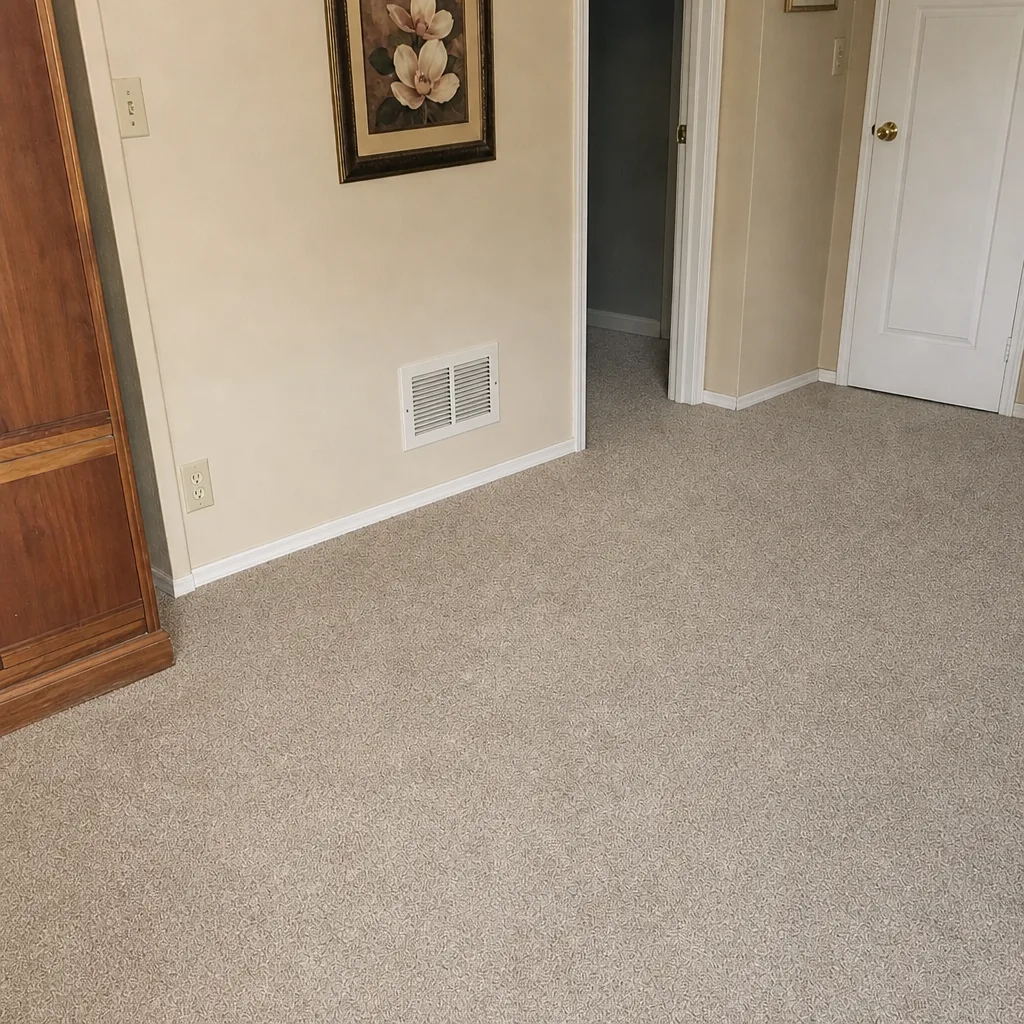
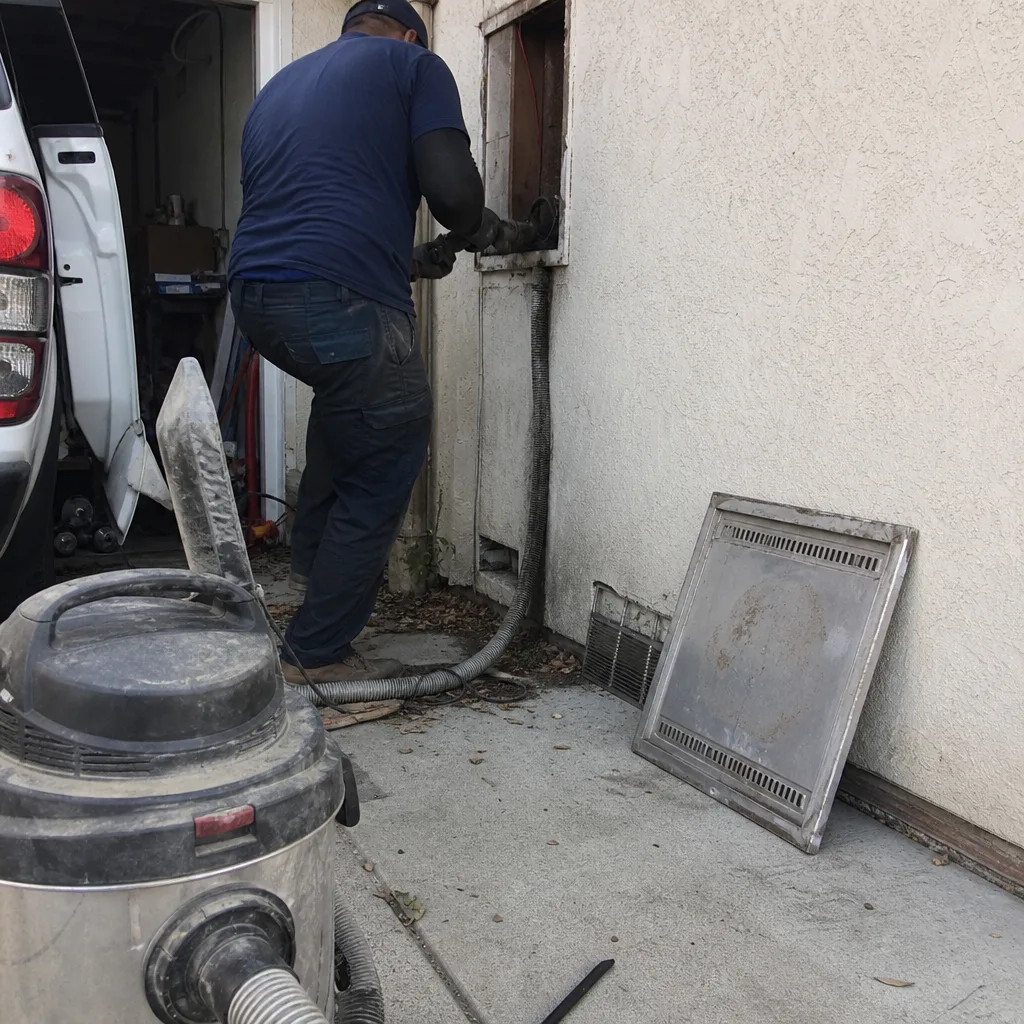
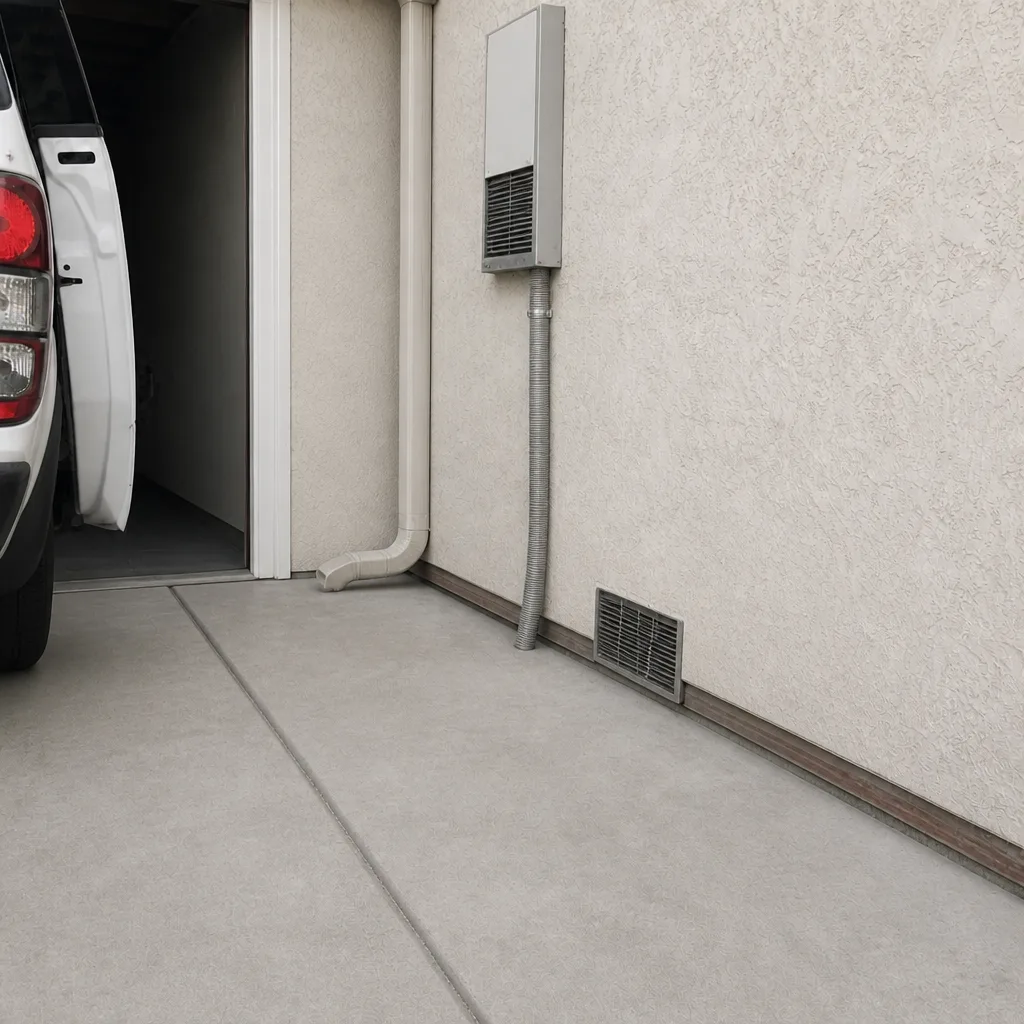
Whole-system duct and dryer vent check with before-and-after photos - you see exactly what came out of your vents
That "$99 whole-house special" is a bait ad - the real number appears once they are in your hallway, or the "clean" is a shop-vac at the register. We photograph the inside of your ducts before and after instead.
Air Duct Cleaning Permits, Codes & Inspections in Park Santiago, CA: What You Need to Know
Most homeowners assume a cleaning appointment is just a cleaning appointment. It isn’t always. The moment a technician re-seals a disconnected duct run, cuts in a new register boot, or swaps out a crushed flex line during what started as a “clean,” the work crosses from maintenance into regulated mechanical alteration. In California, that line matters. It matters at your insurance desk, at resale, and at the escrow inspection that follows a Park Santiago home sale. This guide maps exactly where the permit threshold sits, what paperwork compliant work should leave behind, and how to verify a C-20 HVAC license before the scope of your job grows. It’s written from Park Santiago, for Park Santiago properties.
Quick Answer
Air duct cleaning on its own does not require a permit in California. Duct repair, replacement, or any modification that changes the mechanical system does require a building permit, typically issued under the local jurisdiction’s mechanical code with Title 24 energy documentation attached for duct sealing work. Ask any contractor who goes beyond cleaning to show you the permit, and confirm their C-20 HVAC license through the state before work starts.
Styles & brands we work with
- Whole-home duct cleaning
- Dryer vent cleaning
- Camera inspection
- Sanitizing & deodorizing
Table of Contents
- Where the Permit Line Actually Sits in Park Santiago
- How Title 24 Energy Code Applies to Duct Sealing
- What Documentation to Request After Duct Repairs
- When Duct Condition Triggers a Code-Compliance Issue
- How to Verify a C-20 HVAC License
- Climate and Housing Factors Specific to Park Santiago
- How a Compliant Cleaning and Repair Job Should Unfold
- Common Mistakes to Avoid
Where the Permit Line Actually Sits in Park Santiago
Cleaning is maintenance. Repairing is construction. That’s the cleanest way to hold the distinction in your head. Vacuuming, brushing, and sanitizing the interior of an existing duct system doesn’t alter it, so it doesn’t pull a permit. The system stays exactly as it was, just cleaner. The moment a technician does any of the following, the job becomes a mechanical alteration:
- Reconnecting separated or disconnected duct sections
- Replacing a full duct run, whether flex, rigid, or a section of both
- Cutting in a new supply or return register
- Resizing ductwork to change airflow to a room
- Sealing major leaks with mastic or the application of a duct-sealing method that changes the system’s tested leakage
That last item is where a lot of homeowners get caught off guard. Interior mastic at accessible joints is often treated as routine maintenance under a service call. A comprehensive seal-and-test job, or anything that touches the air barrier the energy code cares about, is a different conversation. In Orange County jurisdictions, the mechanical permit is issued through the city or the county building department depending on where the property sits, and Park Santiago properties fall under that structure.
What does that mean in practice? A cleaning that finds a puddle of disconnected ductwork behind a ceiling grille needs to stop being a cleaning. The technician should be telling you the work has crossed into a repair and explaining whether a permit is required. If they’re doing the repair anyway without mentioning it, that’s your signal to ask questions. A reputable contractor will have this script down cold because they’ve answered it hundreds of times, and they’d rather have the permit conversation with you before the work than have you discover the gap at escrow.
How Title 24 Energy Code Applies to Duct Sealing
California’s Title 24 energy standards treat the duct system as part of the building’s thermal envelope. When ducts are altered, the standard wants evidence the alteration didn’t make the system leakier, and for new construction and additions it goes further, requiring duct leakage testing. For an existing home receiving a targeted repair, the practical impact is documentation: a compliant contractor will be prepared to show what was sealed, to what standard, and with what materials.
This is where the equipment question and the compliance question overlap. A contractor using a two-stage clean-and-seal approach with mechanical agitation from Rotobrush followed by negative-pressure HEPA extraction from Nikro is more likely to notice the leaks that matter and less likely to hide them. Once those leaks are found, the decision tree is simple:
- Are the leaks at accessible joints and small? Mastic sealing is often appropriate and may not require a permit.
- Are entire runs damaged or disconnected? That’s repair work, and the permit conversation applies.
- Does the scope include testing the system’s leakage before and after? That’s where Title 24 documentation lives.
Ask any contractor doing this work directly what documentation they can provide. A contractor who shrugs or tells you the code doesn’t apply to residential repair work is telling you something useful about how they run their business. For Park Santiago homes – many of them single-family builds with attic or under-floor duct runs – this is the exact kind of work where the paper trail separates a professional from a van with a brush.
What Documentation to Request After Duct Repairs
If a technician performs duct repair during your appointment, ask for the following before they leave. This is your job file, and you’ll want it if you ever sell the home or file a claim.
- The permit number and issuing office if a permit was pulled. Confirm the scope on the permit matches the work described.
- Before-and-after photos of the repaired sections, taken by the technician. Photos of your own ducts, not a stock image.
- A written description of the repair: what failed, what was sealed or replaced, what materials were used.
- Duct sealing materials and any leakage test results if the job included Title 24-related sealing.
- The contractor’s C-20 license number on the invoice, matching the license you can verify independently.
- The written estimate you agreed to, with the final invoice matching the line items.
We hand customers a file like this as a matter of course, because the work we do is designed to close the loop on the whole system: cleaning with air duct cleaning, sealing and repairing what’s leaking, and sanitizing what’s left behind. That whole-system approach means the paperwork naturally travels with the work. If your contractor can’t produce this file for a repair, treat that as a red flag. The gap may never matter. It might also surface on a resale disclosure in ten years.
When Duct Condition Triggers a Code-Compliance Issue
Most duct systems in Park Santiago homes are never formally inspected unless a home sale, a remodel, or a specific performance problem invites the inspection. That’s the reality. The good news is that the situations that trigger a code-compliance review are usually the same situations a homeowner can spot: rooms that never get comfortable, dust that settles just as fast as you clean it, energy bills that climb with no explanation, and a musty smell coming from the registers.
Here’s how a duct condition becomes a code issue in practical terms:
- Return-air pathways are often routed through a wall cavity or a panned joist bay that was never meant to be the full return. If a remodel closes off that path, the system runs imbalanced. Correcting it is a mechanical alteration.
- Ductwork that penetrates a garage, attic, or crawlspace boundary is supposed to be sealed and insulated to standard. If it was done casually during an earlier repair, that becomes a code compliance issue when it’s discovered.
- Exhaust from dryers and bathrooms must terminate outside, not into an attic. A disconnected dryer vent or a duct run that dumps into a wall cavity will be flagged by any competent inspection.
That third point connects to dryer vent cleaning, which is less a maintenance nicety than a life-safety service. Lint buildup is one of the leading causes of residential fires, and a blocked or disconnected vent run is the kind of thing a proper inspection catches early. If your dryer is taking two cycles to finish a load or the exterior flap doesn’t move, get it checked.
How to Verify a C-20 HVAC License
California classifies HVAC work under the C-20 Warm-Air Heating, Ventilating, and Air-Conditioning contractor license. Cleaning-only services are not always performed by C-20 licensees, and for a pure cleaning job that may not matter. The moment the scope touches repair, sealing, refrigerant lines, or the mechanical system, you want a C-20. Verifying one is quick:
- Ask the contractor for their license number, in writing, before the appointment.
- Look it up on the Contractors State License Board’s online license lookup. It’s public and free.
- Confirm the license is active, the classification is C-20, and the business name matches the one on the estimate.
- Ask whether the work will be performed by the licensee or by someone working under their license, and get that in writing.
- Confirm the contractor is insured and bonded to the extent the state requires for their classification.
A legitimate contractor will hand over the number without hesitation. Anyone who deflects, says “we’re licensed” without producing the number, or asks you to trust a business card, is not someone you want doing system repairs in a Park Santiago home you plan to sell. That verification step takes five minutes and closes a door that scammers rely on.
Climate and Housing Factors Specific to Park Santiago
Park Santiago is a neighborhood where the housing stock runs older, and older duct systems carry the kinds of wear that make the permit question relevant more often than you’d expect. Original duct runs in decades-old homes were installed for the HVAC technology of that era. When a later system replacement happened, the ducts often stayed. The result is a mixed system: newer equipment pushing air through original pathways, and original pathways that may have been patched in ways that never got documented.
The local climate shapes the cleaning conversation too. Winters here are mild. The AC runs long stretches through the warmer months, which means the duct system is carrying air continuously and pulling dust and debris through the return each cycle. Attic ducts in the area also sit through a long hot season, and the combination of heat cycling and airflow moves flexible ductwork around over time, which is one reason disconnected sections turn up under homes and above ceilings.
None of this is a reason to panic. It’s a reason to know your system. When we open up a Park Santiago home, we run HVAC cleaning as one part of a larger check, because the coil, the blower, and the duct connections all share the same conditioned space. Abatement Technologies negative-air containment is set up before we start, so anything we dislodge stays captured. Guardsman surface protection goes down in the living area. Cleaning a whole system without protecting the home around it is a shortcut, not a method.
How a Compliant Cleaning and Repair Job Should Unfold
Here’s what the sequence looks like when the contractor is treating compliance as part of the job. Use this as your reference point when you’re evaluating an estimate.
- Walk-through and scope definition. The technician inspects accessible duct runs, the air handler, the return pathway, and the registers. They identify anything that looks like a repair, not just a clean.
- Written estimate with two parts. Cleaning line items, and repair line items if any are needed. One flat price per system agreed before work starts, not a per-vent rollup that grows once the technician is on site.
- Permit decision, in writing. If repair scope exists, the contractor states whether a permit is required and either pulls one or explains in writing why it’s not needed.
- Containment and protection. Negative-air equipment goes up, surfaces get protected. This is where Abatement Technologies and Guardsman matter as process signals, not as marketing.
- Two-stage cleaning. Mechanical agitation with Rotobrush to break debris loose from duct walls, followed by Nikro negative-pressure extraction to pull it out of the system.
- Repair and seal. Any disconnected runs reconnected, leaks sealed with mastic, and joints secured. This is the step that decides whether the permit applies.
- Sanitizing. Applied to the clean, sealed system. Sanitizing a dirty system wastes the product; sanitizing after sealing is the right order.
- Documentation package. Photos, permit information if applicable, and the final invoice matching the estimate.
That’s the whole sequence. If a contractor skips step three entirely, or shuffles step six into the cleaning line items, ask why. Sunlight is the best preventive for the escrow conversation that nobody wants to have later.
Common Mistakes to Avoid
- Assuming a “cleaning” quote covers any repairs. Ask the contractor to list, in writing, what’s included and what would trigger a separate estimate. Repairs done under a cleaning quote often come with no permit and no documentation.
- Not asking about the permit before the truck arrives. The permit conversation is easier before work starts. Once the technician is on the roof or in the attic mid-repair, the question gets awkward and you’ll get more vague answers.
- Accepting photos of someone else’s ducts. Before-and-after photos should be of your system. If the images look polished and generic, ask to see the timestamped shots of your own return and supply runs.
- Skipping the CSLB lookup because the reviews looked good. Reviews are easy to game. License verification is not. Confirm the C-20 status on the CSLB website before you sign an estimate.
- Ignoring the dryer vent because it’s not “HVAC.” The dryer vent is a fire-safety run, not a maintenance nicety. A disconnected or clogged vent belongs in the same inspection as the rest of the system.
- Chasing the cheapest per-vent price. A per-vent quote that grows by hundreds once the tech is on site is the industry’s bait-and-switch pattern. One flat price per system, in writing, before work starts, protects you from this.
- Filing the paperwork in a drawer forever. Keep the permit number and the repair documentation with your home maintenance records. When you sell a Park Santiago property, the escrow inspection will value that file.
See the difference
 Before
 After
 Before
 After
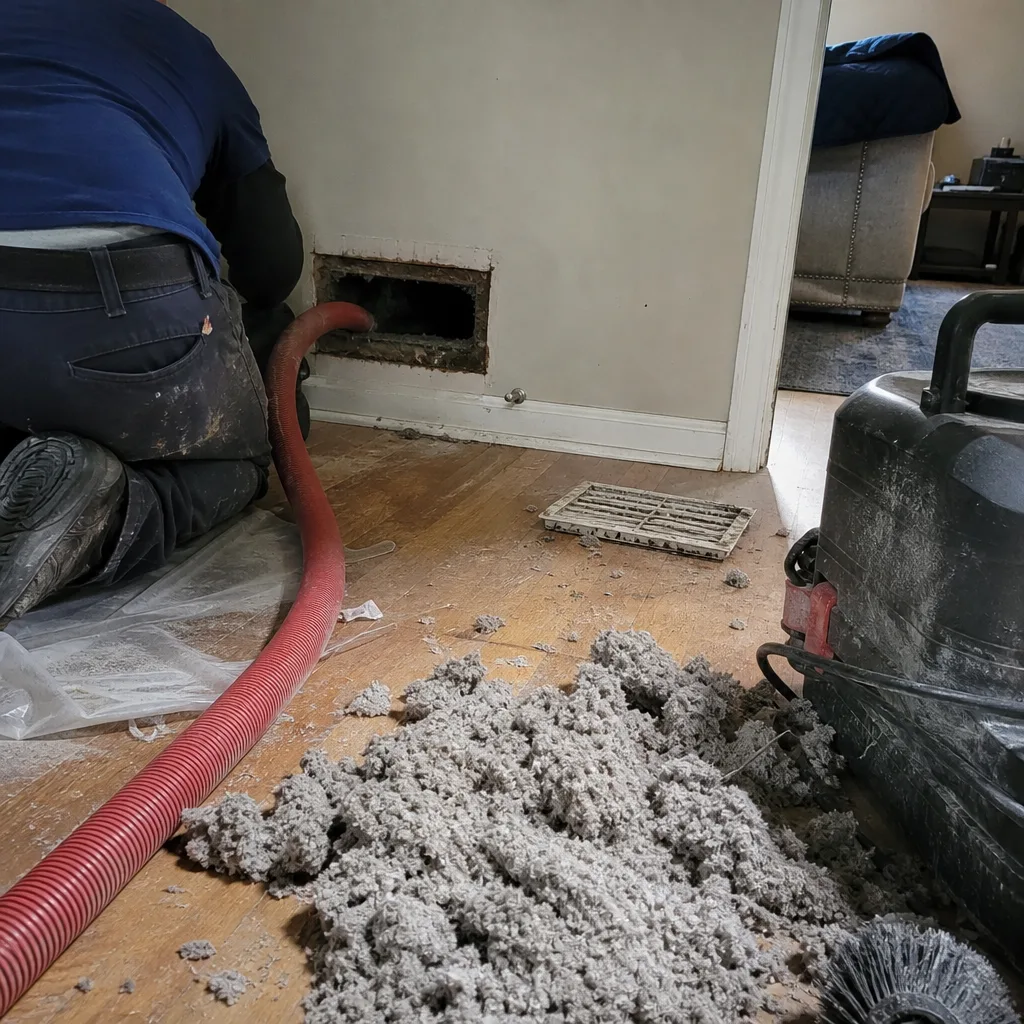 Before
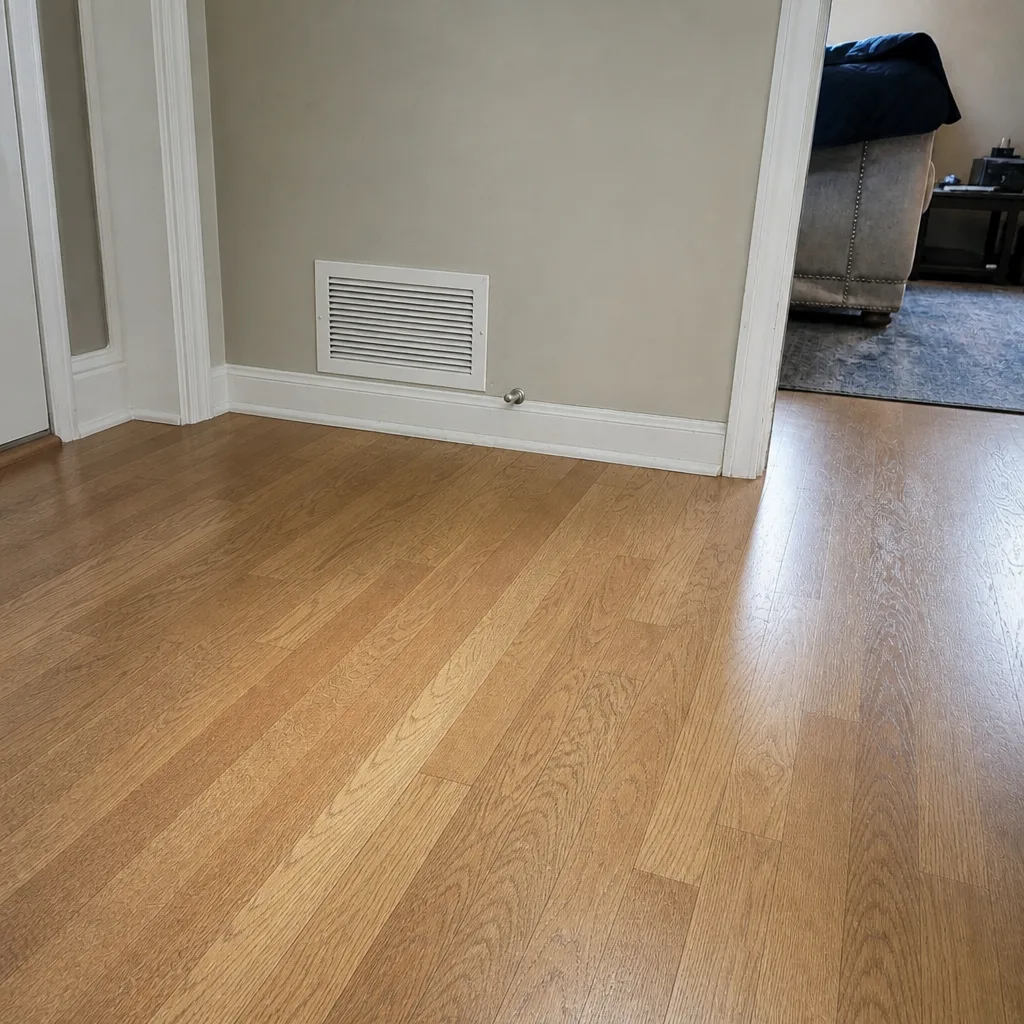 After
When to Call a Professional
Call when you find disconnected ductwork yourself, when a room never gets comfortable no matter what the thermostat says, when dust settles on surfaces you cleaned yesterday, when your dryer takes two cycles or the exterior vent flap doesn’t move, or when you’re preparing a Park Santiago property for sale and want the mechanical system clean before inspection. Also call if a previous contractor’s work looks incomplete or undocumented, since a fresh inspection is the cheapest way to find out. Air Duct Cleaning Park Santiago offers free estimates in Park Santiago – call (844) 625-7040. We answer 24/7. Fast dispatch from 7am to 7pm, Sunday through Friday. Our technicians have up to 9 years of experience, and every estimate is a flat price per system agreed in writing before work begins.
Frequently Asked Questions
No. Cleaning alone is not a mechanical alteration and does not require a permit. A permit becomes necessary when the work includes duct repair, replacement, or any modification to the mechanical system. If a technician starts reconnecting or replacing ductwork during a cleaning appointment, that’s your cue to ask about permits before work proceeds. Call (844) 625-7040 for an exact quote – estimates are free.
Cost varies with square footage, the number of systems, and whether the job includes repair or sealing alongside the cleaning. It is priced per system, not per vent, and the final number is set by the written estimate you receive before work starts. Beware of a low per-vent teaser figure, since those quotes routinely grow once the technician is on site. Call (844) 625-7040 for an exact quote – estimates are free.
Cheap quotes usually leave things out. Negative-air containment, mechanical agitation with professional equipment, surface protection, and post-cleaning documentation all cost money, and a low quote often means those steps are skipped. The real comparison is what’s included, not the headline number. Call (844) 625-7040 for an exact quote – estimates are free.
Ask for before-and-after photos of your own duct runs, taken by the technician, plus a written description of what was cleaned and repaired. That photo record is the standard we hold ourselves to, and it’s what you want when you compare one service to another. Call (844) 625-7040 for an exact quote – estimates are free.
Title 24 energy standards apply to duct sealing work in California, and duct leakage testing may be required depending on the scope of the alteration. A compliant contractor should be able to tell you what documentation applies to your specific job. Ask before the work starts, not after.
There’s no fixed schedule that fits every home. Homes with pets, older ductwork, recent remodels, or allergy-sensitive occupants usually benefit sooner than a clean, newer system. A dryer vent check should be annual regardless of duct cleaning timing, because of the fire-safety risk. Call (844) 625-7040 for an exact quote – estimates are free.
The Bottom Line
The permit question is a documentation question, and documentation is what separates a professional service from a van with a vacuum. Cleaning is maintenance, repair is construction, and the moment a technician crosses from the first to the second, the paper trail matters. Ask for the permit, ask for the C-20 license number, ask for photos of your own ducts, and keep the file. One flat price per system agreed before work starts protects you from the industry’s bait-and-switch pattern, and a contractor who offers air duct cleaning Park Santiago as part of a whole-system approach has no reason to be defensive about any of it. Call (844) 625-7040 to schedule a free estimate. We answer 24/7. Fast dispatch from 7am to 7pm, Sunday through Friday.
Written by the team at Air Duct Cleaning Park Santiago.