
Last updated November 25, 2026
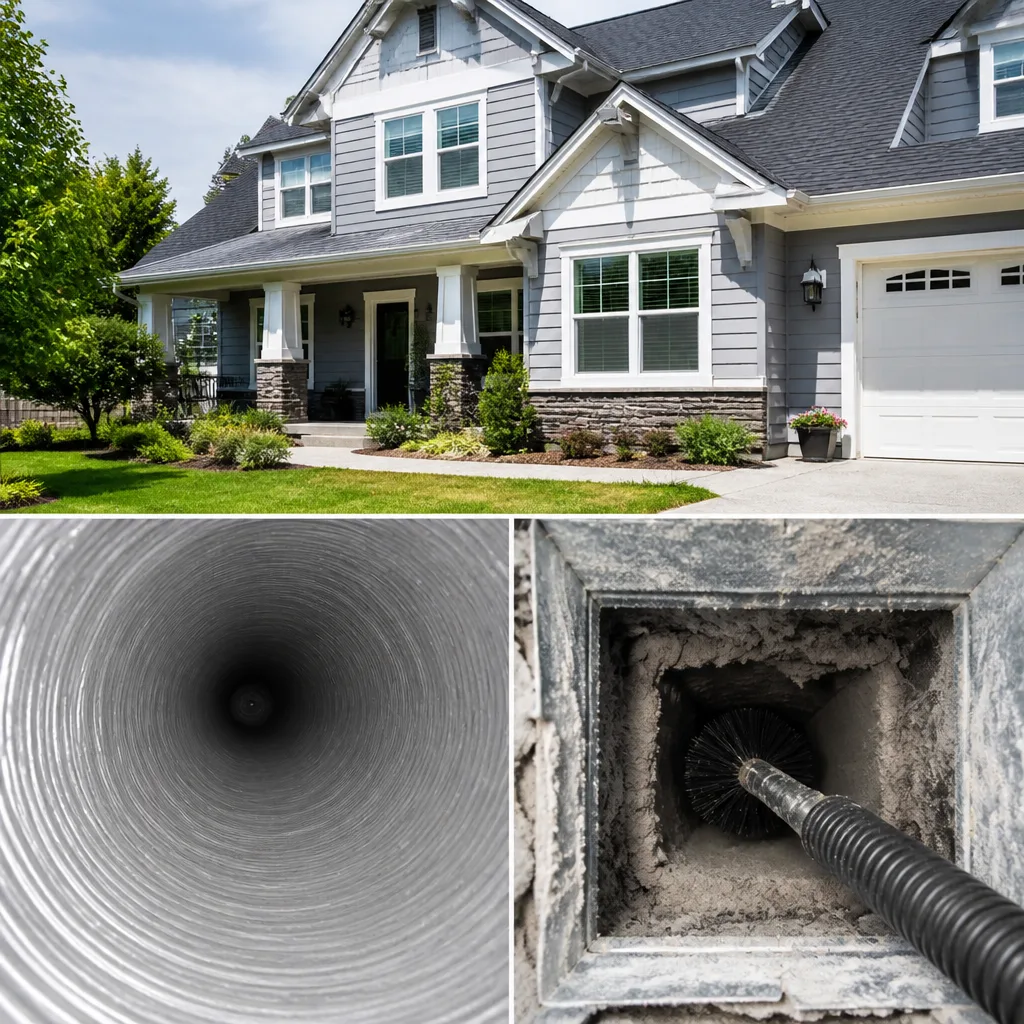 Whole-home duct cleaning
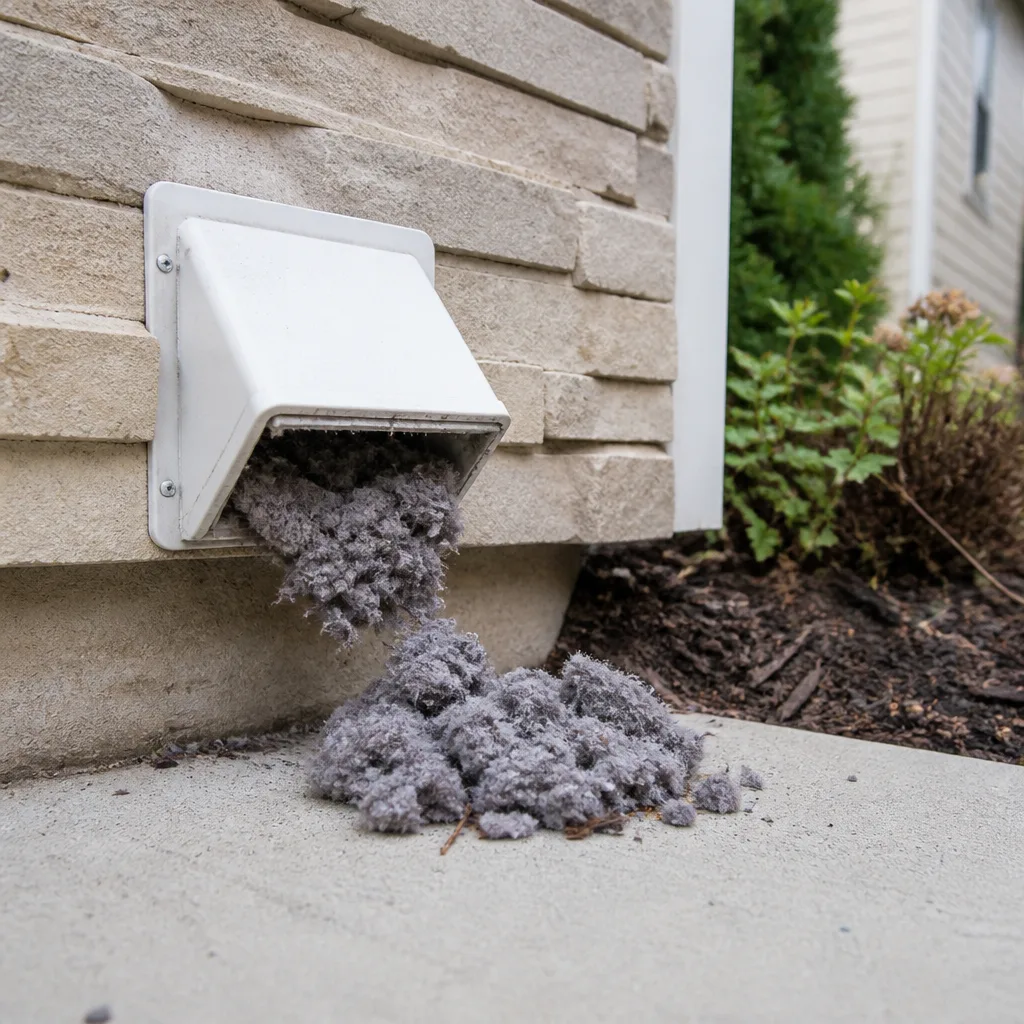 Dryer vent cleaning
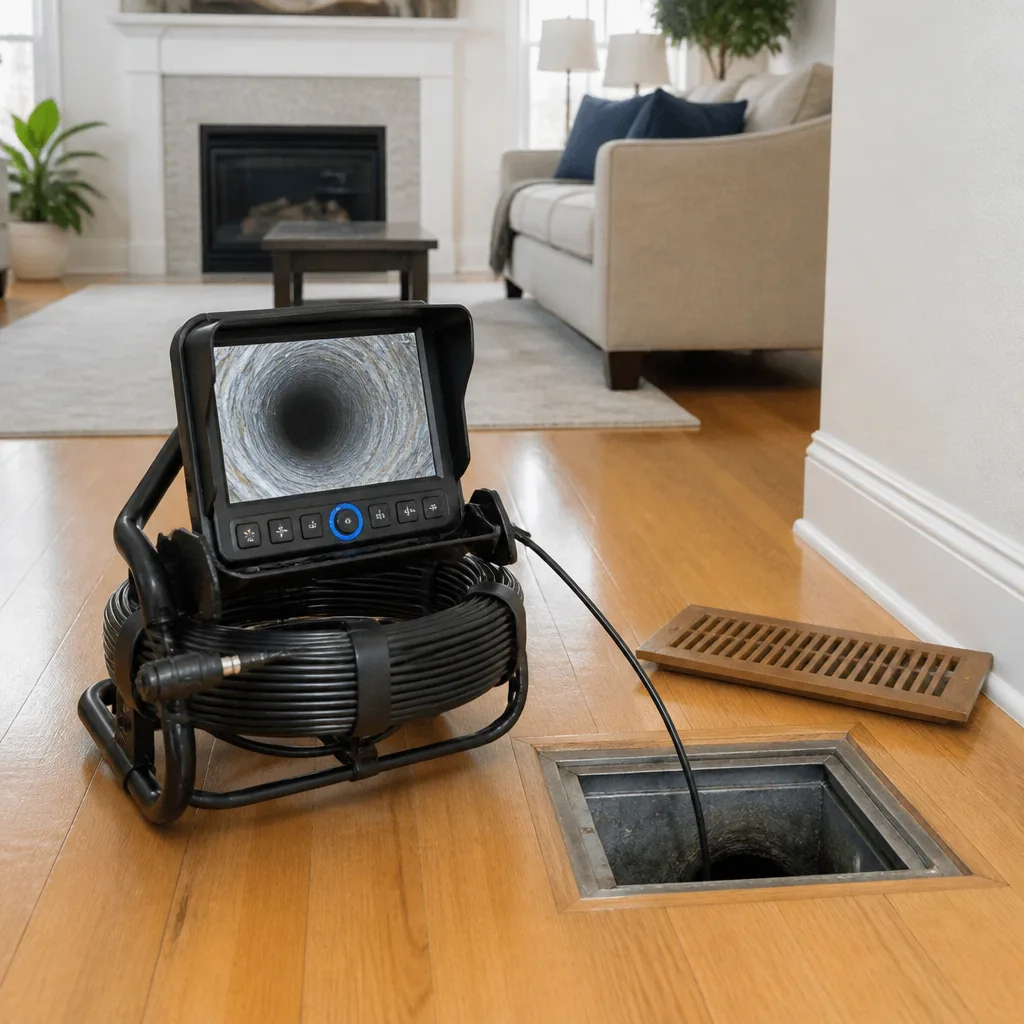 Camera inspection
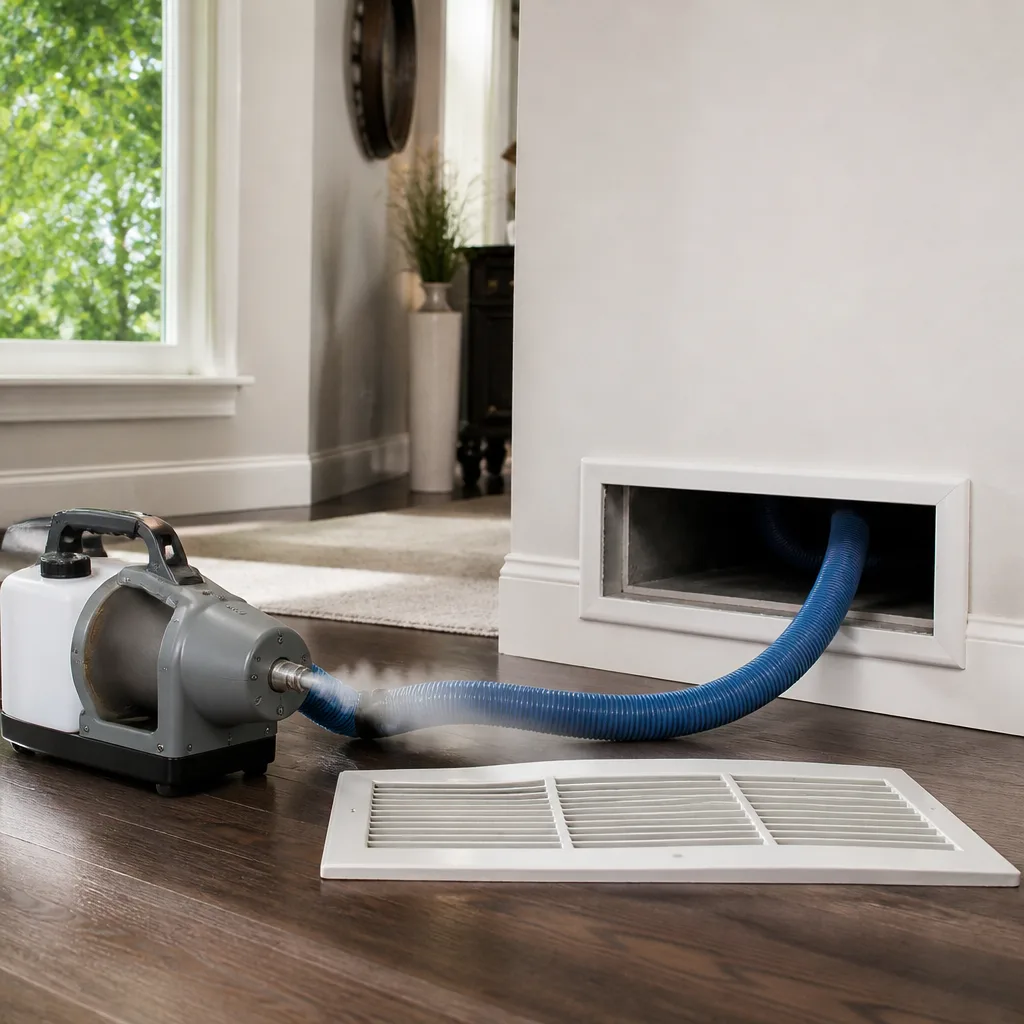 Sanitizing & deodorizing
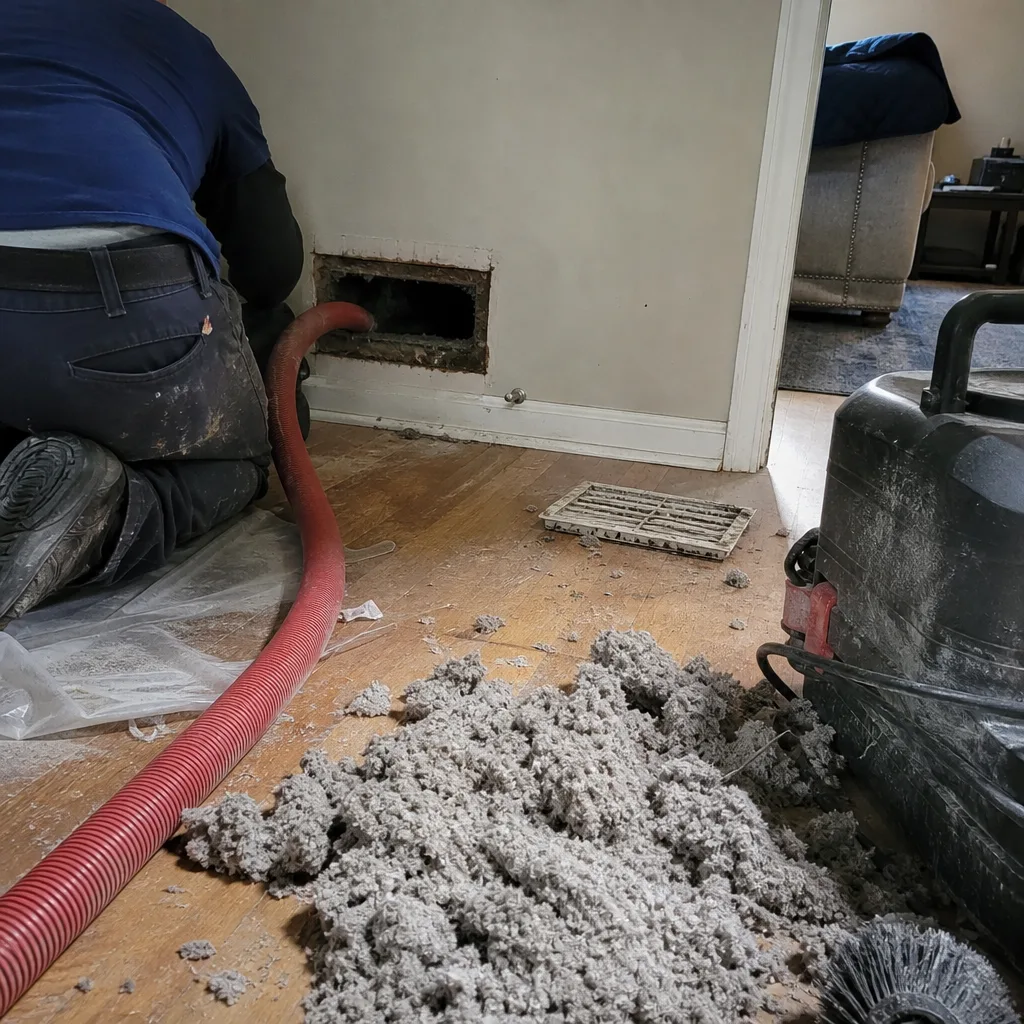
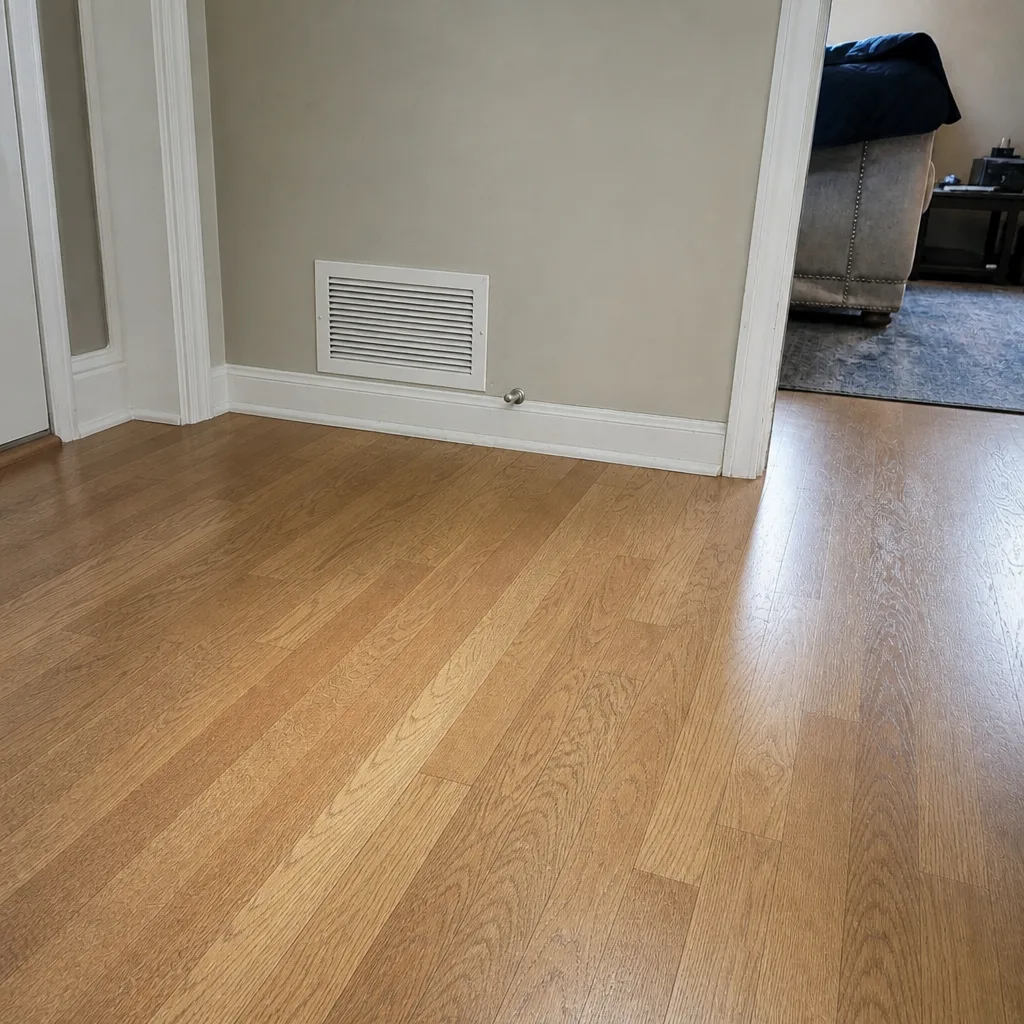
Whole-system duct and dryer vent check with before-and-after photos - you see exactly what came out of your vents
That "$99 whole-house special" is a bait ad - the real number appears once they are in your hallway, or the "clean" is a shop-vac at the register. We photograph the inside of your ducts before and after instead.
Air Duct Cleaning Maintenance Checklist for Park Santiago Homeowners
The filter you changed last month may already be masking a larger duct contamination problem. In older Park Santiago homes, the return grille is often seated a little loose in its frame, and a filter that looks clean on the face can be letting unfiltered air slip past the edges into the system. That bypass keeps the filter looking fine while dust, pollen, and debris keep feeding the ducts behind it. Most homeowners never test for it. In the checklist below, you’ll get a monitoring protocol you can actually run yourself, with pass/fail criteria for each task, and clear thresholds for when a finding is a DIY job versus a reason to call a pro.
Quick Answer
A proper air duct maintenance checklist for a Park Santiago homeowner is a monitoring routine, not a cleaning schedule. Each month you check filter fit and airflow, each quarter you inspect registers and the blower compartment, and once a year you assess the whole system for contamination, leaks, and seal integrity. Cleaning is warranted when the checklist produces specific fail signals, not because a calendar says so.
Styles & brands we work with
- Whole-home duct cleaning
- Dryer vent cleaning
- Camera inspection
- Sanitizing & deodorizing
Table of Contents
- Monthly Checks: Filter Fit, Bypass, and Airflow
- The 60-Second Filter Bypass Test
- Quarterly Checks: Supply Registers and the Blower
- Annual Whole-System Inspection
- Timing Your Maintenance Around Santa Ana Winds
- Dryer Vent: The Checklist Item Homeowners Forget
- DIY Correction vs. Professional Call: The Thresholds
- Common Mistakes to Avoid
Monthly Checks: Filter Fit, Bypass, and Airflow
Monthly tasks are about catching the small stuff before it compounds. None of these take more than a few minutes, and each one gives you a pass or fail result you can track over time. A failure this month that wasn’t there last month is worth more attention than a failure that has been slowly developing.
Work through these in order each month:
- Filter face inspection. Pull the filter and hold it to a light source. Pass: you can see daylight evenly through the pleats. Fail: light is blocked in patches, or the face is visibly gray across more than half its area. That’s a replacement, not a vacuuming.
- Filter seat check. With the filter back in, press gently on each edge. Pass: no movement and no visible gap between the filter frame and the return housing. Fail: any edge flexes or shows a slit of light. This is the bypass indicator, and it’s covered in more detail below.
- Airflow check at a supply register. Hold a tissue against a supply grille and note how firmly it holds. Pass: it stays flat against the grille. Fail: it flutters weakly or falls away. Weak airflow across multiple registers points to a filter, blower, or duct issue worth tracking.
- Perimeter dust check. Wipe a dark cloth across a shelf or TV stand you dusted a week ago. Pass: light, even film. Fail: a noticeable carpet of fresh dust within days means dust is entering the living space faster than filtration is capturing it.
- Odor check at the nearest supply. Stand near a running register and breathe. Pass: neutral. Fail: musty, sweet, or dry-dust smell. Odor at the supply means something is growing or sitting inside the duct path.
Log each pass or fail with the date. A single fail is a nudge; two or three in a row on the same item is a pattern. Patterns are what justify professional attention. Our technicians on the Air Duct Cleaning Park Santiago page run whole-system assessments when monthly logs show two or more consistent fails. A monthly log is also the single best piece of evidence you can bring to any cleaning consultation, because it tells a technician what the system has been doing between visits.
The 60-Second Filter Bypass Test
Filter bypass is when air routes around the filter instead of through it, and in older Park Santiago homes with original return grilles and slightly warped frames, it’s common. This test takes about a minute and tells you whether your system is actually filtering at all.
- Turn the system fan on at the thermostat so air is moving through the return.
- With a flashlight, look at the gap between the filter’s outer edge and the return housing on all four sides.
- Hold a tissue or a smoke pencil near one edge of the filter. If the tissue is pulled toward the slot rather than toward the filter face, air is bypassing.
- Repeat at each edge and note which side pulls hardest.
- If bypass is present, check the filter’s nominal size printed on the frame against the return housing’s labelled size. A filter one size too small in either dimension produces a permanent bypass.
A correctly sized filter with a snug seat should give a pass on all four edges. If you’re seeing bypass at the bottom edge only, the filter may just be sitting slightly out of its track. If the bypass is at multiple edges or the housing frame itself is bent or cracked, the filter can’t seal no matter what you install. A professional-grade gasket or a properly sized filter is a DIY swap; a damaged return frame is not.
This test matters because bypass doesn’t just let debris through. It also means every particle that goes around the filter is coating the blower wheel and the inside of the supply trunks. That accumulation is what eventually forces a full air duct cleaning instead of a filter change. Catching a loose seat monthly keeps the system doing the job it was built for.
Quarterly Checks: Supply Registers and the Blower
Every quarter, go one layer deeper than the filter. Register interiors tell you what’s coming from upstream, and the blower compartment tells you what your filter is letting through. Neither requires tools or training to inspect, only a flashlight and a steady light source.
Supply register interior check
- Even light film on the inside of the grille: normal settling. Wipe it and move on.
- Uneven buildup concentrated on one side of the grille: indicates that branch of duct is running dirtier than the others. Note the room and check next quarter.
- Visible fibers, matted material, or dark streaks inside the boot: contamination is in the branch duct, not just the register. That’s a cleaning indicator.
- Rust spots or water staining at the boot: condensation is entering the duct. Worth a professional look even if visible dust is low.
- Loose tape, gaps at the boot edges, or a register that moves: a leak path. The system is pulling garage, attic, or wall-cavity air into the supply.
Blower compartment check (fan off, and only if the front panel is designed to open without tools)
Shine a light on the blower wheel. Pass: the blades are visible and the spaces between them are open. Fail: the blades are caked or furry, or the compartment floor has a visible dust layer. A caked blower wheel is heavy, and it moves less air. It’s also a sign the filter isn’t capturing what it should. Cleaning a blower safely requires proper tray protection and re-balancing awareness, so don’t attack it with a shop vac. Professional-grade equipment with the panel off and containment in place is what this job needs. The same applies to the evaporator coil, which sits downstream and can’t be inspected properly without disassembly.
Each quarterly check item is a pass or fail. Log it next to your monthly entries. When you book an HVAC cleaning appointment, a technician can use your quarterly notes to zero in on the branch ducts and components that have been showing a pattern.
Annual Whole-System Inspection
Once a year, step back and look at the whole forced-air pathway as one system. This is the inspection that decides whether the following year is a maintenance year or a cleaning year. Do it before the cooling season starts, and again after the first stretch of hot weather, so you’re not inspecting a system that’s been sitting idle.
Walk through this in order:
- Open a sample of supply registers across different rooms. Compare interior cleanliness across zones. A single dirty register is a localized issue; several dirty registers in the same wing of the house points to a leak or a compromised trunk.
- Inspect accessible duct runs in the attic, crawl space, or utility corridor. Look for disconnected joints, crushed flex, torn insulation, and dust trails at the joints. Dust trailing out of a joint means the system is losing conditioned air into that space.
- Check the air handler and plenum connections. Gaps at the plenum, at the transition to the trunk, and at filter housing frames are common leak points and pull unfiltered air into the supply.
- Record the thermostat’s filter-change dates against your monthly log. If the filter interval has been shrinking while the load hasn’t changed, the system is working harder than it should.
- Note any room that’s consistently cooler or warmer than the rest. That’s a distribution issue, not a temperature preference, and it usually means a duct problem worth a professional diagnosis.
Each item above produces a finding. Two or more material findings (leaks, crushed runs, trailing dust at joints, or a rapidly fouling filter) is the threshold for a professional system inspection. A single finding with a clear cause can often be handled with a targeted fix. Our experience in Park Santiago is that the leaked, unsealed joints are what most cleaning-only outfits miss entirely, because they’re focused on vacuuming the interior and never look at the exterior of the ducts. Duct repair and sealing is where system integrity actually gets closed.
Timing Your Maintenance Around Santa Ana Winds
Santa Ana winds push dry, particle-heavy air through the region, and that load lands on your HVAC system whether you’re running it or not. The effect is that a filter that would normally last two months can be at its limit in weeks when a wind event runs through. Adjusting your checklist timing is the easiest way to keep up.
- Before a wind season: check and replace the filter, confirm the return seat is snug, and verify that no exterior return vent or combustion air intake is pulling straight from a windward wall.
- During a wind event: keep windows and doors closed, run the fan on continuous or low rather than cycling off, and check the filter face weekly instead of monthly.
- After wind subsides: repeat the filter face and airflow checks, wipe register exteriors, and add an entry to your log even if no other check was due.
- If your home relies on a window unit or a garage return: check for gaps that can pull wind-driven particulate directly into the system.
Wind timing also shifts when annual cleaning makes the most sense. Booking a cleaning before wind season resets the system to a clean baseline right before the biggest particulate load of the year. Walking into wind season with a duct system that’s already loaded with debris means the system spends the entire event redistributing what it already had. High-efficiency filtration upgrades are worth a look too, and Honeywell and Aprilaire filter housings integrate with most forced-air systems and address both capture efficiency and humidity control. That’s an equipment choice, not a cleaning decision, and the two work best together.
Dryer Vent: The Checklist Item Homeowners Forget
Dryer vent cleaning is a safety maintenance item, not an appliance accessory. Lint is highly combustible, and elevated lint buildup in a dryer vent is a leading cause of residential fires. Yet most homeowners have no dryer vent line on their maintenance checklist at all. This is the item that belongs on every quarterly and annual list, right next to the filter.
Here’s how to check it without a professional:
- Run a dry load and time it. If the cycle has gotten noticeably longer than it used to be, the vent is likely restricting airflow. That’s a fail.
- Feel the exterior vent flap when the dryer is running. Pass: the flap is pushed open and air is clearly moving. Fail: the flap stays mostly closed, or the flow is weak.
- Run your hand along the flexible duct behind the dryer. Look for kinks, crushed sections, or a run that’s been pushed too far back. Any of those can trap lint.
- Check the lint screen housing with the light on. A layer of lint behind the screen or on the transition collar is the first sign the internal vent is loading up.
- Look at the exterior termination. A missing or jammed exterior flap, or a screen with lint packed against it, needs fixing.
If a dry load is running long, the exterior flow is weak, or lint is accumulating behind the lint trap, that’s the signal to book a professional dryer vent cleaning. Do not rely on a garden hose, a shop vac with a long hose, or a leaf blower. The run can contain compacted lint that needs proper agitation and capture to remove safely, and dryer vent cleaning is included as one of our five core services specifically so that the whole air pathway can be addressed in a single coordinated visit.
DIY Correction vs. Professional Call: The Thresholds
The hardest part of any checklist is knowing where the DIY line sits. Here are the thresholds we use, spelled out so you can apply them without guessing.
- Filter replacement and correct seating: DIY. Never a reason to call.
- Return grille screw tightening or a filter gasket: DIY if the housing frame is intact. If the frame is cracked or warped, professional.
- Wiping register exteriors and interiors: DIY. If the boot is matted or rust-stained, professional.
- Re-attaching a loose register with no duct access: DIY. Any duct connection that requires removing a register or opening a boot, professional.
- Dust trail at a duct joint, crushed flex, or a torn insulation jacket: professional. Sealing requires proper mastic, mesh, and access that a homeowner won’t get right, and it’s the interior of the duct where the problem is.
- Blower wheel caked with debris, or any work requiring removal of the air handler panel: professional. There’s electrical and balance on the line.
- Dryer vent restriction that fails the exterior flap test: professional. The run has compacted lint and needs capture, not a shop vac.
- Two or more monthly fails that persist over three months: professional system inspection.
- Any odor at a supply register that returns after wiping: professional, because odor usually means growth in the duct or evaporator coil, and both need proper sanitizing, not masking.
One more threshold worth spelling out: if your annual inspection turns up both a diy-fixable issue and a leak or a crushed run, fix the DIY item yourself and treat the duct issue as the professional call. Doing both in the same visit is where Air Duct Cleaning Park Santiago fits naturally, since the seal-then-clean sequence keeps the leak from recontaminating what was just cleaned. The price is set per job by the written estimate agreed before any work starts, and before-and-after photos are part of the job.
Common Mistakes to Avoid
- Cleaning on the calendar instead of on the checklist. A “once a year no matter what” schedule cleans systems that don’t need it and skips systems that do. Monthly and quarterly findings tell you what a calendar can’t.
- Skipping the filter bypass test. A filter that looks clean but sits loose in its frame is filtering nearly nothing. Test the edges, not just the face.
- Judging the whole system by one dirty register. One dirty register is a local branch issue; a whole wing of dirty registers is a system problem. Compare across rooms before deciding.
- Vacuuming the blower wheel with a shop vac. A shop vac can’t capture the fine dust and can push it further into the system. Proper cleaning uses negative-air containment and mechanical agitation, not shop tools.
- Assuming Santa Ana wind season doesn’t matter because the system is sealed. A leaky return frame pulls wind-driven particulate right past the filter. Wind season amplifies existing bypass.
- Leaving the dryer vent off the list entirely. Elevated lint buildup in a dryer vent is a leading cause of residential fires. There is no safe amount of it.
- Sealing a duct by taping the outside only. Mastic or proper mesh plus the interior surface is what holds. Tape lifts, mastic holds.
See the difference
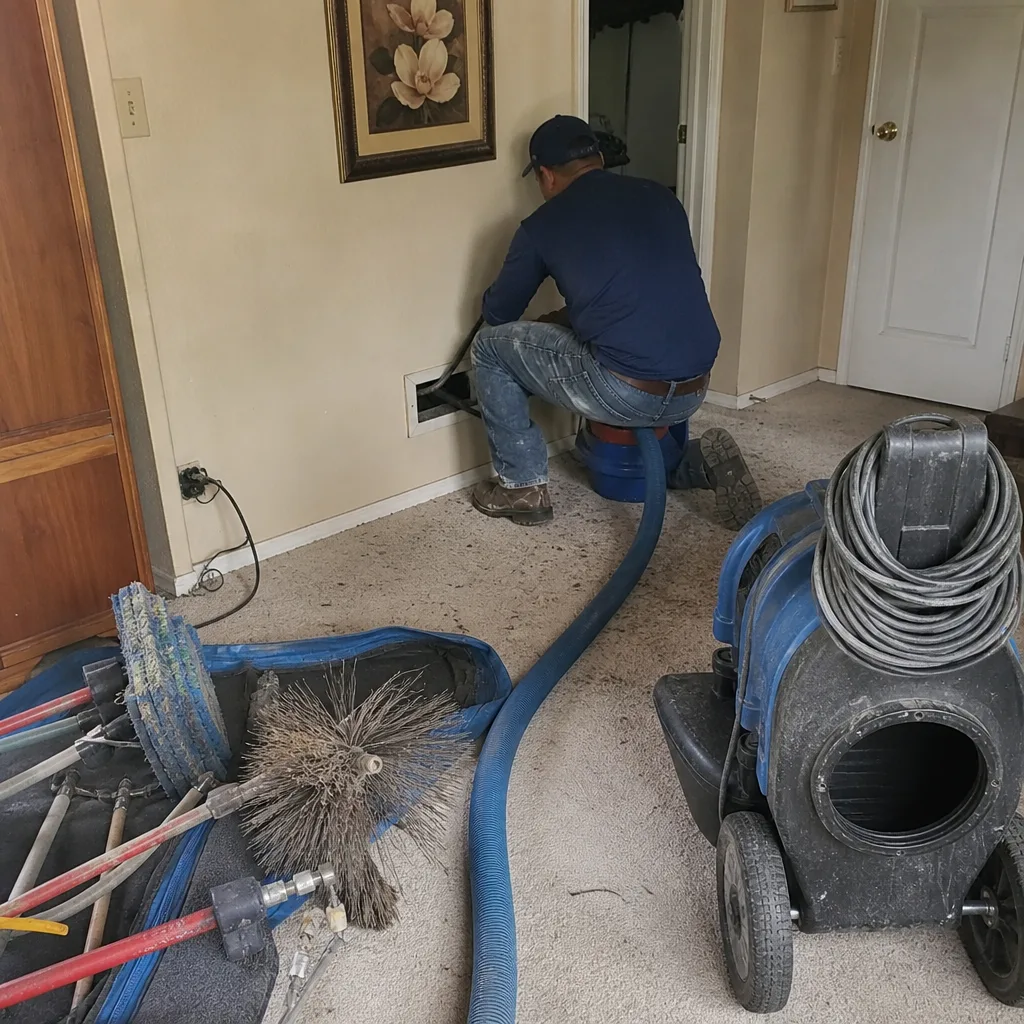 Before
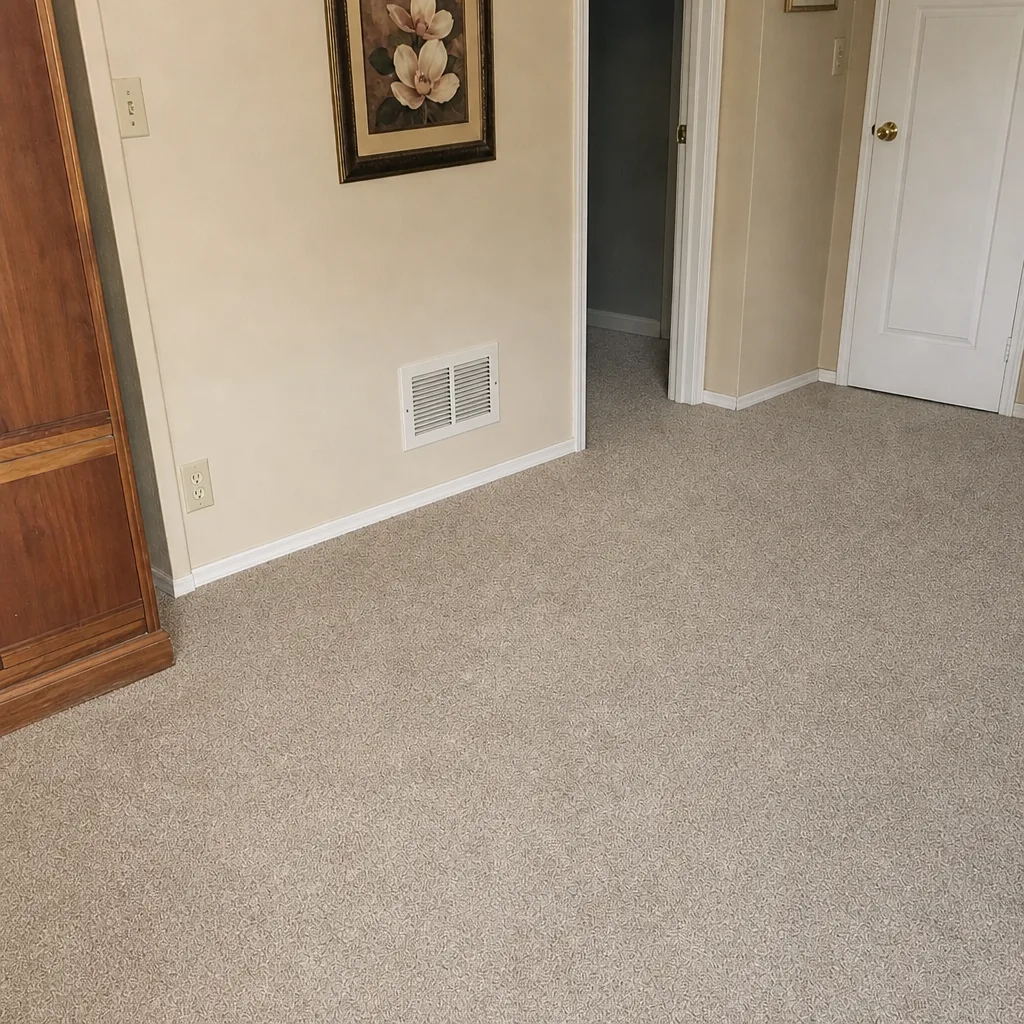 After
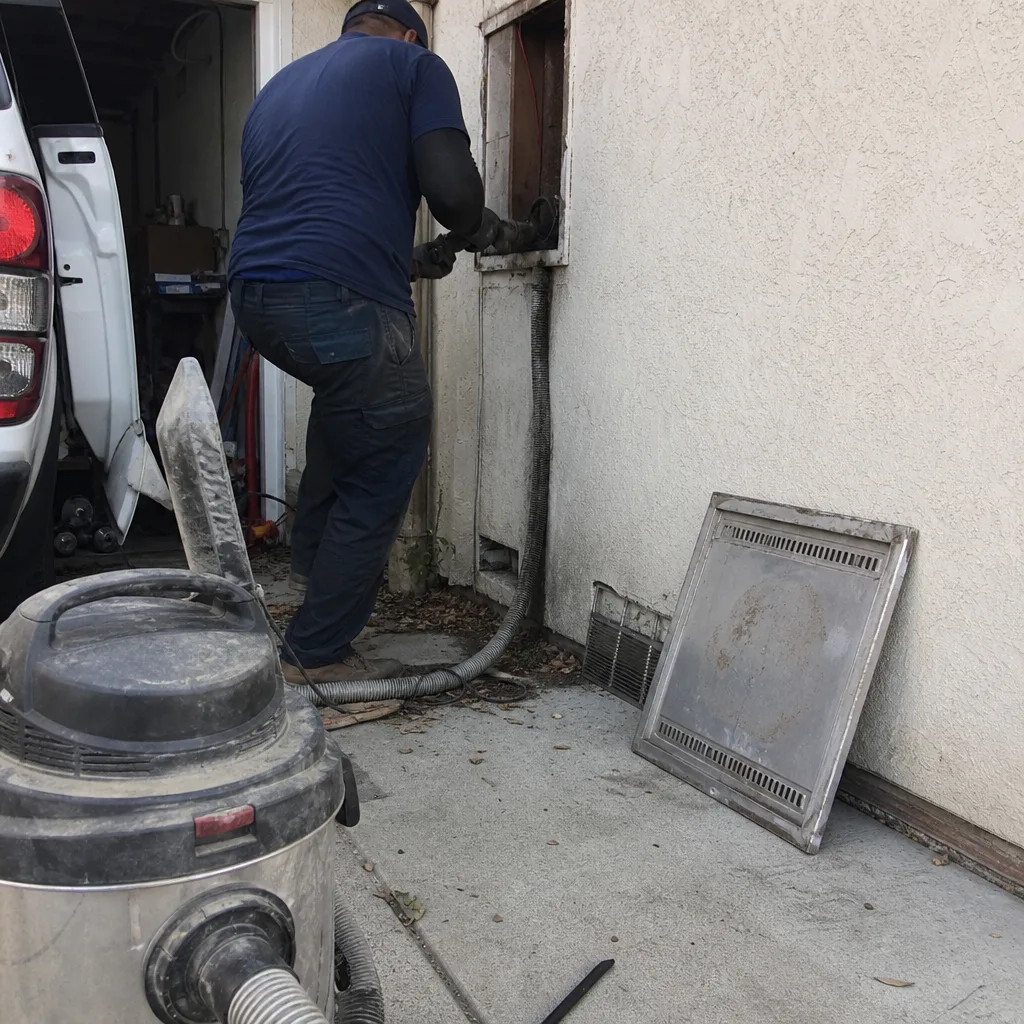 Before
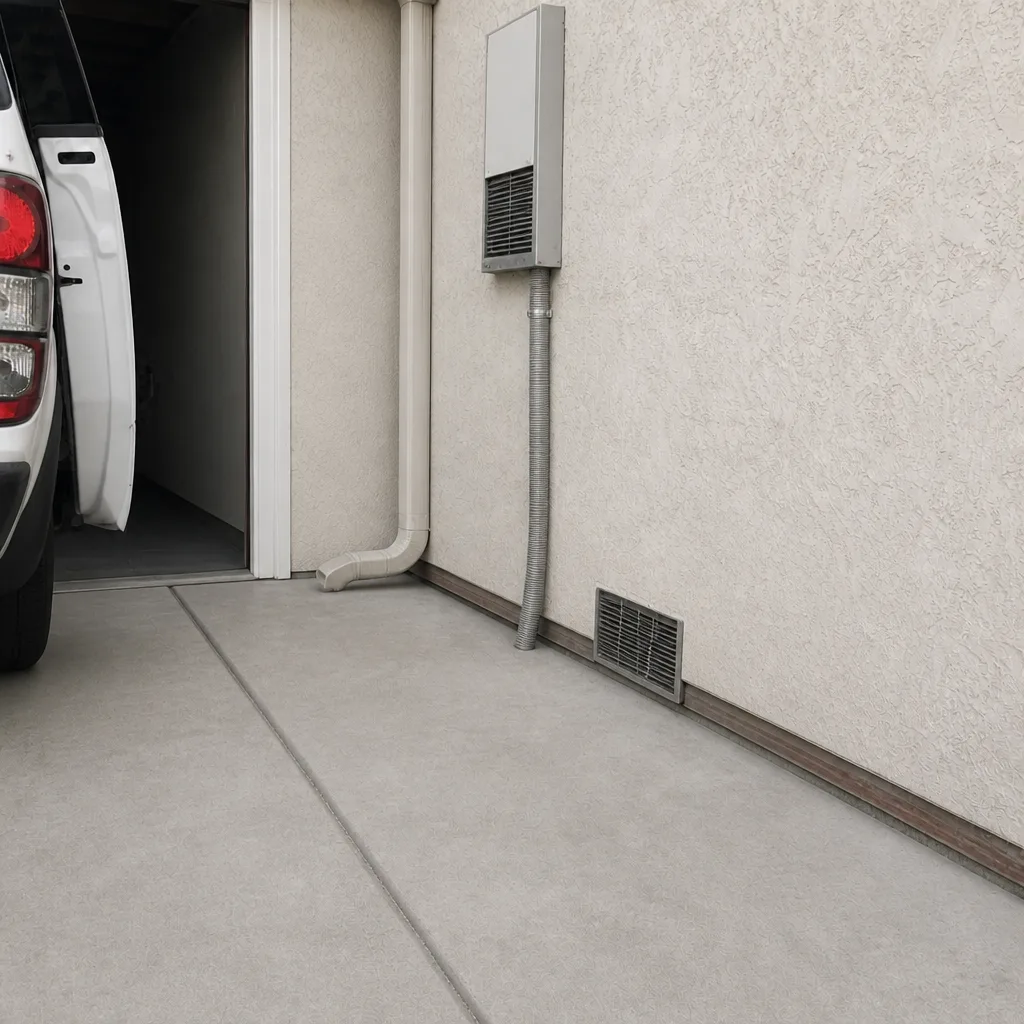 After
 Before
 After
When to Call a Professional
Call a professional when a checklist finding crosses one of the thresholds above and you can’t correct it yourself, and when the pattern of findings has shifted. Specifically: a filter that bypasses on multiple edges after a correct-size change, a blower wheel that’s visibly caked, a duct joint trailing dust, a crushed run, musty odor that returns after a supply wipe, a dryer vent that fails the exterior flap test, or two or more persistent monthly fails over three months. Any one of these is a maintenance reason, not a “wait and see” reason. Air Duct Cleaning Park Santiago offers free estimates in Park Santiago. Call (844) 625-7040. We answer 24/7. Fast dispatch from 7am to 7pm, Sunday through Friday.
Frequently Asked Questions
Most systems need professional cleaning based on the checklist findings, not on a fixed interval. In practice that’s usually every few years for a well-maintained system and sooner when the monthly and quarterly checks show persistent fails. Because a checklist-led schedule responds to what your system is actually doing, less-frequent cleanings are safe as long as the monitoring stays honest. Call (844) 625-7040 for an exact quote if your log shows a pattern: estimates are free.
The clearest homemade sign is a comparison across supply registers: wipe the interior of a register in each room and look for a difference. If several registers in the same wing of the house are matted or dark while others are clean, the contamination is in the branch ducts. Dust trails at an accessible duct joint are another strong signal, because they mean air is escaping at that point rather than being contained. Pull a register and look, don’t just feel the airflow.
Monthly filter checks are the right frequency; monthly filter changes are not. The check tells you whether to replace, and a filter that passes the light test and looks even should last longer. Santa Ana wind season is the exception: check weekly during a wind event, because the particle load spikes in a short window. Wasting filters on a monthly schedule doesn’t protect the system; sniff out a filter that keeps clogging and look for a bypass or leak instead. Call (844) 625-7040 with your log if a filter is clogging faster than the load justifies.
No, not reliably. Foil tape lifts when the duct expands and contracts with the seasons, and it doesn’t seal the interior surface where the leak actually begins. Proper duct repair and sealing uses mastic and mesh on the joint, and it needs access to the duct run that most homeowners don’t want to open up. Two or more leaking joints are the threshold for a professional visit, and the leak will keep recontaminating any duct that’s been cleaned until it’s properly closed. Call (844) 625-7040 for a free estimate on duct repair and sealing.
Cheap quotes usually cover a partial job: one pass through the easiest-to-reach runs with a shop vac, no containment, no sealing, no before-and-after documentation. A proper whole-system clean agitates with a mechanical brush and extracts with negative-air HEPA equipment, and it closes leaks afterward so the interior stays clean. A low teaser price that turns into a much larger invoice once the technician is on site is the industry’s bait-and-switch pattern, and the way to avoid it is a written, whole-system price agreed before work starts. At Air Duct Cleaning Park Santiago, that’s one flat price per system. Call (844) 625-7040 for an exact quote.
Before-and-after photos of your own ducts, taken during the job and shown to you before the technician leaves, are the standard. Ask for them in advance and confirm the technician will document the work on your system specifically. Interior containment with negative-air equipment is the second marker, since it means the debris was captured rather than pushed into the living space. If a company can’t explain its method by name, that’s the honest signal. Call (844) 625-7040 to schedule an estimate.
The Bottom Line
The best duct maintenance checklist is a monitoring protocol, not a cleaning schedule. Check the filter fit and bypass every month, inspect registers and the blower every quarter, and review the whole system once a year, before and after Santa Ana wind season. Log each find so a pattern can surface, apply the DIY and professional thresholds honestly, and never leave the dryer vent off the list. When a finding crosses a threshold, that finding is the reason to call; a clean bill of health is the reason not to. For a whole-system assessment on your Park Santiago home, call (844) 625-7040. The estimate is free, the price is one flat price per system agreed before work starts, and before-and-after photos of your own ducts are part of the job.
Written by the team at Air Duct Cleaning Park Santiago.